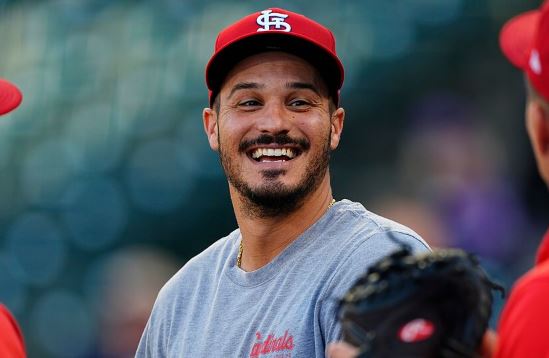
The St. Louis Cardinals are approaching what may be one of their most pivotal offseasons in recent memory, as the organization begins charting a course for its long-term future. All eyes are now on Nolan Arenado, the $260 million cornerstone of the infield whose name has become the focal point of escalating trade speculation. With Chaim Bloom stepping in as the new president of baseball operations, the Cardinals find themselves at a decisive crossroads — one that could reshape the identity and competitive direction of the franchise for years to come.
A Critical Juncture for St. Louis
As the Major League Baseball postseason unfolds, the sport’s attention is currently fixed on the Los Angeles Dodgers, who are set to represent the National League in the World Series, while the Toronto Blue Jays and Seattle Mariners continue to vie for the American League crown. But once the confetti settles and the final pitch of the World Series is thrown, focus across the league will immediately pivot toward offseason maneuvering.
For the Cardinals, that shift will carry far greater weight than in most years. Following consecutive disappointing seasons and a growing sense of urgency to return to contention, this offseason represents a chance for the front office to reset its strategy. It will also serve as a defining moment for Bloom, whose first winter at the helm will set the tone for how aggressively St. Louis plans to rebuild or retool.
Analysts around the league agree that Arenado’s name stands at the forefront of every major conversation. Despite his elite defensive pedigree and consistent power production, questions persist about whether the organization might leverage his value in a blockbuster deal to address multiple roster needs at once.
The Trade Buzz Intensifies
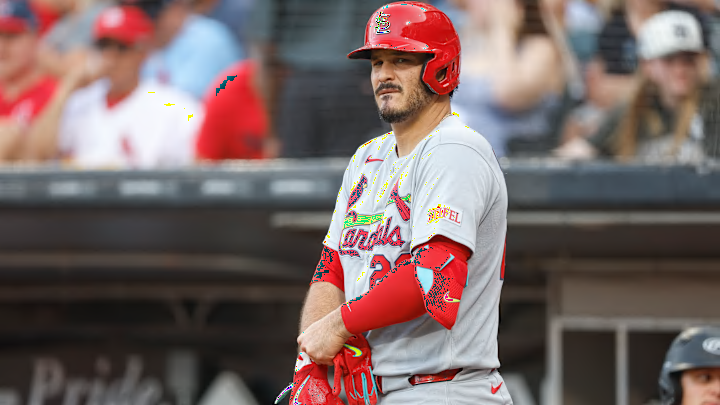
While trade rumors often circulate during this time of year, the whispers surrounding Arenado are growing increasingly credible. Insiders have suggested that this is no longer mere speculation but a scenario the Cardinals are seriously evaluating. The combination of Arenado’s contract structure and the team’s desire to gain financial flexibility makes a trade appear both logical and increasingly likely.
Arenado is owed $16 million in 2026 and $15 million in 2027, in addition to $6 million in deferred salary from each of those years — a structure that, while substantial, remains manageable for clubs seeking an established star at third base. The financial relief St. Louis would gain from moving him could be redirected toward younger, controllable players or much-needed pitching depth — areas that have been glaring weaknesses for the team.
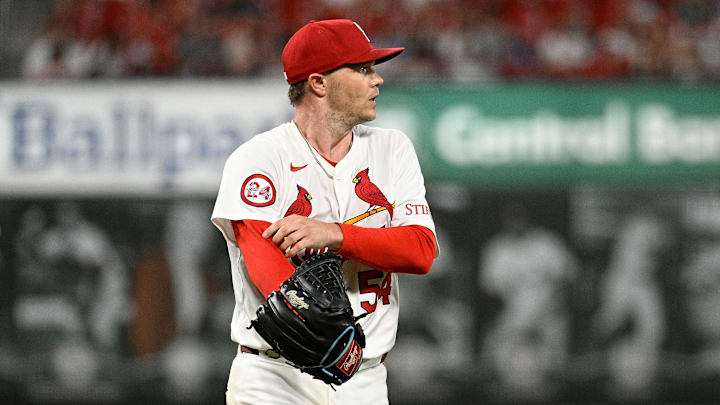
Furthermore, Arenado’s potential departure could align with broader financial recalibrations. Veteran pitcher Sonny Gray carries a $35 million salary for 2026, with a club option for 2027, while catcher Willson Contreras is due $18 million in 2026 and $18.5 million in 2027, along with an additional club option for 2028. Collectively, these commitments exceed $100 million, giving the Cardinals a chance to dramatically reduce payroll while repositioning for the future.
A Turning Point in Team Philosophy
The Cardinals’ front office must now determine what kind of team it wants to be moving forward. For years, the organization prided itself on consistency and homegrown development, building around stars like Paul Goldschmidt, Arenado, and a steady core of veterans. However, recent results — including multiple missed postseasons — have underscored the need for a more flexible and forward-looking approach.
Trading Arenado would be a monumental decision, not only because of his stature but also because of what it would signal: a potential shift away from the “win-now” mentality toward a more sustainable, long-term model built around emerging talent. The move could open opportunities for young players like Jordan Walker or Masyn Winn to take on larger roles, while also creating space to pursue impact arms on the trade or free-agent market.

The Road Ahead
Once the World Series concludes, the Cardinals’ decision-making process will accelerate. Bloom and his staff will be tasked with weighing the emotional and competitive costs of parting with one of the franchise’s most recognizable stars against the potential benefits of a more balanced, financially agile roster.
For fans, the coming months could prove to be both nerve-wracking and defining. A trade involving Arenado would mark the end of an era and signal a new phase in the Cardinals’ evolution. Yet it could also provide the spark needed to reignite a team that has fallen short of its championship aspirations.
As the offseason approaches, one thing is certain: the Cardinals’ choices over the next several weeks will shape the organization’s future trajectory. Whether the front office opts for a calculated rebuild or a bold retool, St. Louis stands on the edge of transformation — and the outcome of this winter could determine how soon the franchise returns to its winning ways.