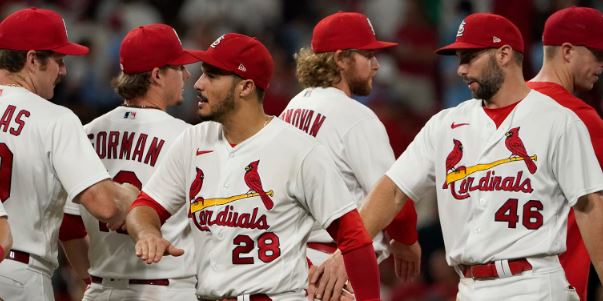
The 2025 season is officially in the books, and with it comes the start of a new chapter. Disappointment fades, hope takes its place, and while the offseason hasn’t truly begun, the chatter about how to improve the roster is already in full swing. Everyone seems to have an opinion on what the St. Louis Cardinals should do next—but ultimately, those decisions rest with the team’s leadership, led by new president of baseball operations Chaim Bloom.
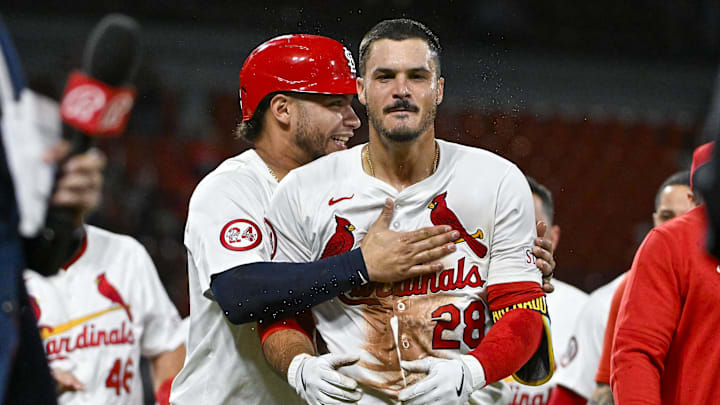
While we wait for the front office to make its moves, there’s no harm in playing a little “armchair GM.” So, today, we’re introducing a game called “40-Man Roster Roulette.”
One of the first priorities this offseason will be trimming and reworking the 40-man roster, a process expected to unfold over the next week or so. The challenge: reshaping the roster while keeping it balanced and compliant with MLB rules. The link to the 2025 season-ending roster (built in Google Sheets) provides the base. Feel free to copy it and test your own ideas—it’s trickier than it looks.

Here are the basic ground rules:Follow MLB regulations. For example, decide what happens with Zack Thompson once the 60-day IL is cleared after the World Series.
Stay at 40 players at all times. You can’t exceed the limit, and you’ll need a minimum of 22 (preferably 23) pitchers while maintaining positional balance. Add one, drop one—it’s like a 40-card deck you can’t expand.
Anyone you remove is gone for good. No clever “DFA and re-sign later” moves. Once a player is off, assume he’s lost.
Roster balance matters. Keep between 22–24 pitchers and 16–18 position players.
No 60-day IL moves until spring training begins (so pitchers like Sem Robberse, Cooper Hjerpe, and Tekoah Roby must stay active for now).

You can use placeholders for external additions—such as SP#1, RP#1, or OF#1—to represent free agents or trade acquisitions without naming names.
The scenario below represents just one possible approach. Many of these decisions are made for the sake of the offseason debate itself—but they also reflect an attempt to anticipate how Bloom and his staff might handle their first real test of roster management in St. Louis.
I began with the 2025 season-ending roster, shown below. The Cardinals opened the year with a payroll of roughly $142 million, which had been reduced to around $117 million by the end of the season. As for what the 2026 payroll budget will look like—your guess is as good as mine. From the sound of it, Chaim Bloom doesn’t seem to know yet either.
The first steps were the easy ones—or so I thought. I began by removing Miles Mikolas and sliding Zack Thompson into his place as the 60-day injured list expired. In practice, it was mostly a procedural move, though it quickly became clear that even the “gimmes” weren’t going to stay simple for long.
Thompson’s situation has turned increasingly uncertain. He’s still unable to throw, and there’s been word that his reported lat tear from spring training may have masked a more serious labrum injury. While that hasn’t been officially confirmed, the lack of progress lines up with that possibility. At 28 years old, Thompson continues to accumulate major league service time—and salary—without contributing on the mound. It’s hard to justify protecting him at the expense of a younger, healthier arm, so in my version of the roster, he’s the first to go.
Next came Jorge Alcala, who is arbitration-eligible but hasn’t performed at a level that would warrant another contract. Removing him seemed straightforward. Both Thompson and Alcala’s spots can be replaced by low-cost free agent signings this winter—let’s call them SP#6 and RP#1 for now. The Cardinals could technically keep them on the roster for a short while longer, but those decisions would likely prove temporary.
With that settled, the focus shifted to the Rule 5 Draft, where teams must finalize their protected lists by November 14. After scanning the organization, a few clear names stood out. On the position player side, Leonardo Bernal, Jeremy Baez, Cesar Mendoza, and Thomas Torres appear to be the most deserving of protection. Among pitchers, Pete Hansen, Cooper Hjerpe, Wilmer Santos, Edwin Rincon, and possibly Max Rajcic lead the conversation.
My expectation is that the Cardinals will add Bernal, removing Pozo to make room. They’ll also likely add Baez, though that might mean cutting Prieto, a decision that feels less certain. When it came down to the outfield and utility options, I decided to retain Torres over Siani and Koperniak. Torres offers positional flexibility—he can handle the infield, serve as an emergency catcher, and contribute at the plate—making him a more well-rounded piece than Siani, whose role overlaps with players like Church and Scott. Realistically, one of that trio (Siani, Koperniak, or Torres) stays, while two depart.
Turning to the pitchers, I don’t see the Cardinals protecting Santos or Rincon, both of whom are currently injured. Rincon, in particular, hasn’t pitched much above Double-A, which makes it unlikely another team would keep him on their major league roster for an entire year. Both can instead be placed on the Triple-A reserve list, where they’re less vulnerable to selection.
On the other hand, I do expect Hansen and Mautz—two left-handers with upside—to be added to the 40-man roster. To balance those moves, I dropped Munoz and Koperniak, restoring the pitching staff to 22 arms and trimming the position player group to 18. That adjustment makes the loss of Thompson easier to absorb. I also chose to protect Ian Love, who has strong draft pedigree and put together a solid season, while letting Anthony Veneziano go.
The biggest question mark remains Cooper Hjerpe. His skill set and potential make him hard to ignore, but carrying a third injured pitcher—alongside Tekoah Roby and Sem Robberse—creates roster complications. The front office could consider dropping Robberse to keep Hjerpe, but without access to medical updates, that’s a tough call. Another possibility would be cutting Raquet instead, though that would leave the team light on healthy depth for the major league staff. If they decide to keep Hjerpe, it likely means dropping a position player and rolling with 23 pitchers and 17 hitters. In that case, it essentially becomes a Hjerpe vs. Torres decision. Personally, I’d choose to keep Hjerpe and later sign a journeyman utility player (OF#5) in spring training once Hjerpe moves to the IL.

That brings us to Blaze Jordan, acquired from Boston in the Steven Matz deal. Jordan is a 22-year-old corner infielder with a 40 FV grade who has shown flashes at Triple-A but remains inconsistent. Because he’s Rule 5 eligible, his situation is tricky—he’s young and talented but not yet ready for a full big league season. The Cardinals clearly see something they like, but given the current roster crunch, I left him off the 40-man. Stashing him on the Triple-A reserve list seems the safest bet; it’s unlikely another team would risk carrying him all season in the majors.
When the dust settles, my projected roster heading into the Rule 5 Draft sits at 40 players total—22 pitchers and 18 position players. That configuration leaves two open spots should the Cardinals wish to participate in the draft, but picking 11th overall rarely yields much value. I’d expect them to pass on the MLB portion and instead stay active in the minor league phase, as they did last year when they acquired Ugueto.
Given the number of injured pitchers, the team would probably prefer a 23–17 roster split, though reaching that balance won’t be simple. I’ve also updated the expected 2026 arbitration salaries using projections from MLBTradeRumors.com. All in all, this round of “40-Man Roster Roulette” turned out to be far trickier than expected—and it’s only the beginning of what should be a fascinating offseason for Chaim Bloom and the Cardinals’ new-look front office.
Trades and Free Agents
Up to this point, every roster move has been made with the long term in mind. Now that the initial shuffling is complete, it’s possible to step back and identify where this roster still needs improvement in the short term. It’s no secret the Cardinals need better outfield production and greater starting pitching depth and quality. If they can only improve one area this winter, though, the question becomes—which should they prioritize?
When looking at the roster post-adjustments, I focused on players who aren’t likely to provide significant value—either now or in the future. For a team in transition, those are the spots most worth upgrading, rather than worrying about which position might offer a short-term boost to the 26-man roster.
On the position player side, Nolan Arenado and Jose Fermin fit that description. That’s not a knock on either—Arenado has been a great player—but at age 35, the team could realistically get 1–2 WAR from several internal third-base options. Fermin, meanwhile, profiles best as a bench contributor, and while every team needs those players, that’s still a role that could be upgraded without sacrificing a key prospect. Willson Contreras, on the other hand, remains valuable and should stay put for now.
Among pitchers, Matt King, Zach Raquet, and Nick Roycroft fall into a similar category—solid role players without much upside or long-term projection. Raquet’s story is admirable, Roycroft has had multiple opportunities, and King’s arbitration-driven salary increase reduces his appeal. In total, that leaves about five roster spots that could be improved this offseason, ideally by replacing those players with legitimate prospects rather than low-ceiling fillers. That, of course, won’t be easy—acquiring quality young talent will likely require parting with established big leaguers or taking on salary.
Winter Meetings Scenarios
Heading into the GM Meetings, the front office won’t yet know what’s possible in terms of trades involving Sonny Gray, Arenado, or Contreras—and in what combination or at what cost. What’s certain is that they’ll need to add at least one more starter, even if Gray stays. Expect a free-agent signing in the $5–7 million range (the previously mentioned SP#6 slot).
If Arenado is traded, the team frees up both roster space and salary, opening a window to reallocate that money toward an outfield upgrade. One potential framework: St. Louis could agree to cover the $6 million deferred payment due in 2026 (payable in 2041) plus $15 million of his 2026 salary, leaving the acquiring club with a two-year, $21 million deal ($10.5M AAV). The Cardinals would save $7 million in 2026 and $15 million in 2027, while clearing a path for JJ Wetherholt in the infield. Alternatively, they could channel those savings into more pitching help.
If Gray is dealt, the team could save around $20 million in 2026, depending on how much salary they cover (for example, paying $15M in 2026 and $5M in 2027 as a buyout). In return, they’d hope to land a prospect who doesn’t need 40-man protection, or at least open space to sign two or three additional free agents. However, moving Gray would thin the pitching depth, forcing more bullpen shuffling and possibly leaving the team short on experienced arms.
Trading Contreras would free up even more room—roughly $18 million in 2026 and $18.5 million in 2027—and could clear first base for Alec Burleson. The Cardinals might need to cover a $5 million buyout, but if they can find a pitching-rich trade partner, a legitimate pitching prospect could headline the return.
The team could also explore deals for Brendan Donovan or Lars Nootbaar, though both carry risk. Donovan’s modest salary doesn’t make a big dent in payroll, but his trade value could bring back a two-for-one package—one near-MLB-ready player (ideally an outfielder or pitcher) and one longer-term prospect. Nootbaar’s recent surgery probably removes him from trade consideration for now.
If Arenado stays, moving Nolan Gorman becomes a possibility, opening up a path for Wetherholt while keeping Fermin as a depth infielder. Still, in my projection, I assumed Arenado gets traded, while Gray, Donovan, and Nootbaar stay put—mainly because dealing Gray wouldn’t meaningfully improve performance or flexibility without a strong prospect return.
Spring Training Outlook
By the time spring training arrives, the focus shifts to the Opening Day roster. At this point, predicting trades is impossible, so this stage is about internal movement. Prospects like Wetherholt, Henderson, Doyle, and Mathews could all push for roster spots, though each addition would require a corresponding subtraction.
The first three players could take advantage of 60-day IL openings for Roby, Hjerpe, and Robberse, but the Cardinals will be cautious about starting service-time clocks early—rehabbing on the IL still accrues MLB pay and service. My assumption is that Arenado is traded, and the team adds both a starting pitcher and a reliever (SP#6, RP#1).
If Wetherholt and Mathews both impress, they could break camp with the team. Wetherholt would likely slide into the infield if Arenado or Gorman are moved, while Mathews might start in Triple-A Memphis as the seventh starter, similar to how McGreevy was used in 2025. The organization has multiple paths for Wetherholt—second base (if Donovan moves), shortstop (if Winn is dealt), or third base (if Arenado or Gorman go). That decision may depend on trade returns, and the team could delay his addition until Opening Day to preserve flexibility.
If fans want to see Henderson or Doyle on the roster, someone else will have to be cut, and that’s unlikely barring a surprise. Likewise, a low-cost veteran reliever could fill the final open 40-man spot left for RP#1, providing additional bullpen insurance.
Payroll Implications
This isn’t meant as a full payroll breakdown, but the financial picture is worth noting. If Contreras and Gray remain on the roster, the 2026 payroll would project around $132 million, down from $142 million in 2025. That includes one free-agent outfielder and the reduced cost of an Arenado trade.
If the “Big Three”—Arenado, Gray, and Contreras—are all traded, payroll could drop by as much as $50 million in 2026 and $58 million in 2027, creating significant flexibility to pursue future free agents—but at the cost of short-term competitiveness.
Broader Impact
The 40-man roster directly shapes the 26-man roster, particularly the pitching staff. Most teams carry about 23 pitchers on the 40-man, with 13 active at any given time and the rest rotating through due to injuries, doubleheaders, and fatigue. The Cardinals currently have only six healthy pitchers outside their projected Opening Day group—and half of them have never pitched above Double-A. That’s not sustainable.
This could reopen the door for players like Victor Santos, Zack Thompson, or even Miles Mikolas to retain spots simply to maintain depth.
This entire exercise mirrors what every draft-and-develop team faces annually. The better an organization becomes at developing talent, the tougher it gets to manage roster space—a good problem to have. Older prospects get squeezed out as younger ones rise, and every offseason becomes a balancing act between future potential and present depth.
The Cardinals have kept a relatively static 40-man roster over the past few years, but that period is likely ending under Chaim Bloom’s leadership.
This analysis is meant for discussion, not prediction. Debate, critique, and alternative takes are all part of the fun—after all, that’s what the hot stove season is for. If you want to try your hand at your own version of 40-Man Roster Roulette, the 2025 season-ending roster spreadsheet is available to experiment with. Fair warning: it’s much harder than it looks.
Leave a Reply