
In the National League West picture, the Arizona Diamondbacks could end up being the true wild card.
The Los Angeles Dodgers look like a sure thing to reach the postseason, while the San Diego Padres remain in a similar tier only if they can assemble a respectable starting rotation next season, something that is far from certain right now.
As for the Colorado Rockies, the organization continues to struggle under questionable leadership. Until they find a way to attract quality pitching to the challenges of playing at altitude, they appear destined to remain nonfactors.
The San Francisco Giants are harder to evaluate. With a former college baseball coach preparing for his first season as a major league manager, it is unclear whether San Francisco has what it takes to climb back above the .500 mark in 2026.
That leaves Arizona. The Diamondbacks reached the World Series just two years ago, but they have missed the playoffs in each of the last two seasons. Their lineup is among the league’s best, while their rotation remains shaky as they wait for Corbin Burnes to return from elbow surgery. At the same time, the front office has reportedly discussed the possibility of trading perennial MVP contender Ketel Marte.
Despite that uncertainty, Arizona has continued to operate in win-now mode, reinforcing its rotation by adding Michael Soroka on a one-year deal and re-signing Merrill Kelly for two years.
Those signings have effectively cemented an uncomfortable reality for San Diego: the Padres now boast one of the weakest rotations in the National League.

Padres have second-worst rotation in NL West after Diamondbacks sign Merrill Kelly
Thanks largely to the presence of the Rockies, the Padres will likely avoid having the worst rotation in the division. Still, being grouped closer to Colorado than to Los Angeles is hardly reassuring.
A rotation headlined by Joe Musgrove and Nick Pivetta is not enough to seriously challenge the elite teams in the Senior Circuit. San Diego does not need to match a group featuring Yoshinobu Yamamoto, Shohei Ohtani, Tyler Glasnow, Blake Snell, Roki Sasaki, and others, but adding a dependable third starter would go a long way.
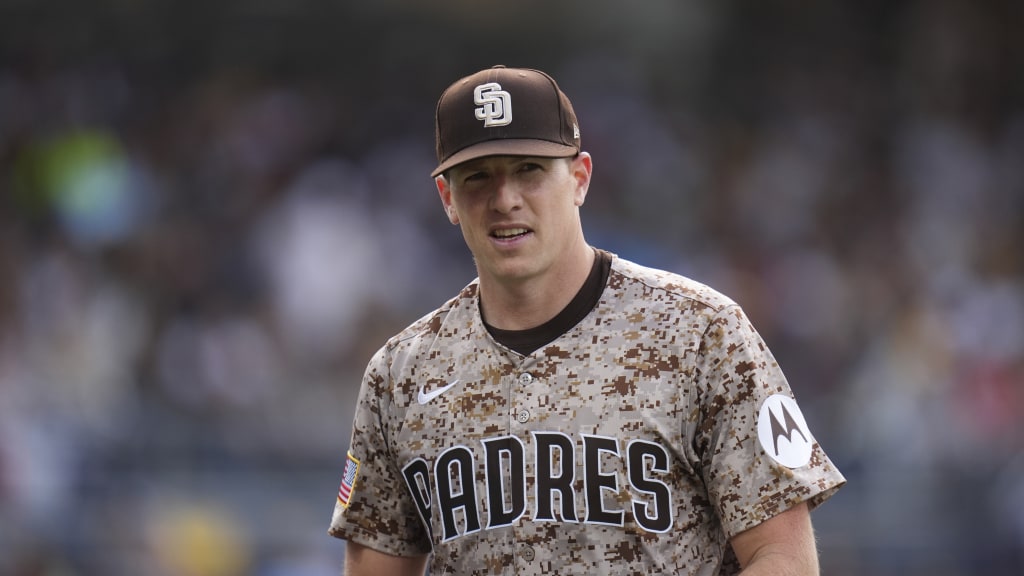
Finding that arm is becoming increasingly difficult as the market continues to thin. Kelly represented an ideal fit for the Padres in terms of both role and cost, but assuming they cannot afford high-end options like Framber Valdez or Tarik Skubal, they are forced to shop in a narrowing tier.
There are still pitchers who meet that mid-rotation profile, including Zac Gallen, Tyler Mahle, and Zack Littell, but available options are disappearing quickly. If pitchers like Kelly are commanding $20 million annually, San Diego could soon be priced out altogether as supply continues to shrink.
A.J. Preller is clearly making the effort, but it is getting harder to envision the Padres fixing all of their rotation problems in a single offseason.