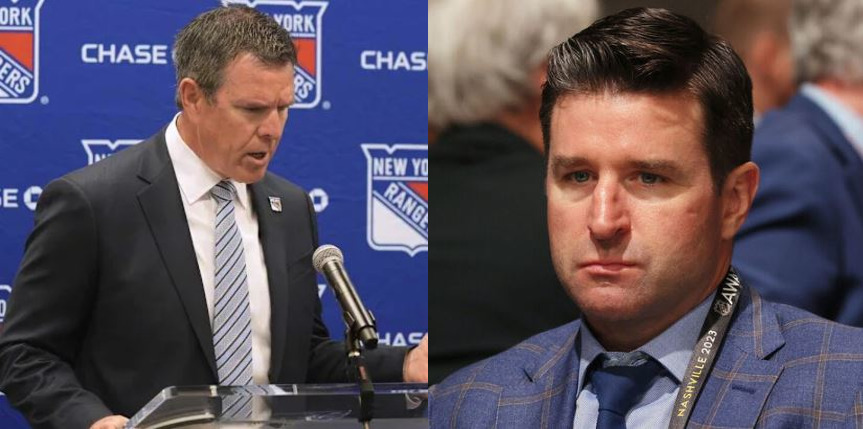
The 2024-25 New York Rangers were widely viewed as a major letdown. That group scored 255 goals, finished 39-36-7 with 85 points, ranked 12th in goals for, and 19th in goals against. This season, the offensive drop-off has been even more glaring. Through 35 games, the Rangers have just 88 goals, placing them 26th in the NHL. After yet another shutout loss at Madison Square Garden, head coach Mike Sullivan addressed what has become the defining issue of the season.
Sullivan’s quote admits what most fans already know

Following the loss to the Vancouver Canucks, Sullivan was candid. “If I had the solution, we would certainly bring it. We’re doing our best to control the process, because that’s really, at the end of the day, what’s within our control. I thought we defended hard tonight. They had a few looks. Their first goal was a little unfortunate. After that, they had a few looks, but not a lot. I thought we defended hard. I thought we controlled territory. We had a significant amount of O-zone time. The power play had a lot of good looks, so I feel like we’re trying to solve it, for sure. But is it a little bit concerning at this point? Yeah.”
What Sullivan said is logical. The 2025-26 Rangers are more structured than last year’s team and do a better job creating chances. They sit 11th in xGF% at 51.5, 17th in CF% at 49.79, and 11th in GF% at 51.08. Those numbers reflect improved defending and stronger underlying metrics compared to last season. While that progress is notable, the offensive struggles should not surprise anyone. This roster has a clear finishing issue, rooted in how it was assembled.
Chris Drury built a flawed roster

While players must execute and deserve some blame, the roster construction falls on Chris Drury. After last season’s underperformance, there was little done to meaningfully boost offense. Last year’s leading goal scorers were Artemi Panarin with 37, Vincent Trocheck with 26, Chris Kreider with 22, Mika Zibanejad with 20, and Will Cuylle with 20. Panarin has long been relied upon, though last season was a step back. Trocheck was steady, Zibanejad struggled badly, and Cuylle impressed in his second full NHL season.
From that group, it appears Drury counted on internal rebounds. Panarin returning to form, Trocheck maintaining his level, Zibanejad bouncing back, and Cuylle continuing his development were expected to cover the gap.
There was also an assumption that Kreider’s lost production could be offset by players like Alexis Lafrenière, Gabe Perreault, and a full season of J.T. Miller. On paper, that logic is understandable. In practice, it was risky. Drury needed not just to replace offense, but to raise the team’s overall offensive floor. Relying heavily on internal growth is always dangerous, especially given past results, which makes this offseason’s choices particularly frustrating.
Drury should have known better
When Pavel Buchnevich was traded, Drury argued that increased opportunities for players like Vitali Kravtsov, Kaapo Kakko, and Lafrenière would compensate for the loss. That plan never materialized. Instead, the Rangers later made deadline deals for Andrew Copp, Frank Vatrano, Vladimir Tarasenko, and Patrick Kane. While the Tarasenko and Kane moves made sense in theory, they ultimately ended with a first-round playoff exit.

If Drury was going to gamble on youth again, he needed a proven top-six fallback option in case it failed, once more. That safety net never existed. As a result, the Rangers are now realizing that their perceived talent level may have been overstated.
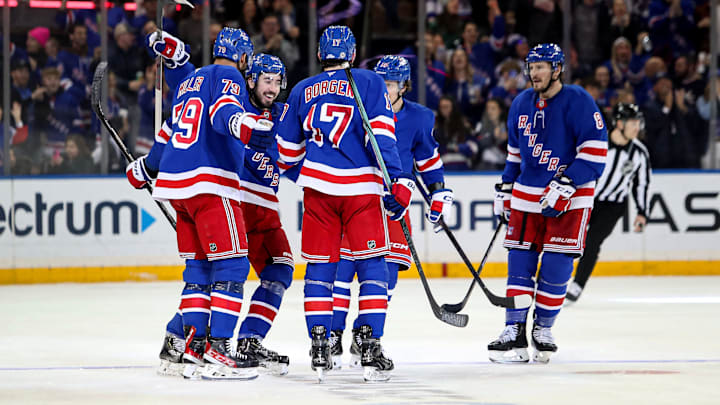
At this stage, Panarin and Zibanejad lead the team with 11 goals each. They are followed by Miller and Cuylle with nine, Lafrenière with seven, Vladislav Gavrikov with six, and then Trocheck, Noah Laba, and Taylor Raddysh with five apiece. After that, production drops off sharply, which aligns with how the roster was built.
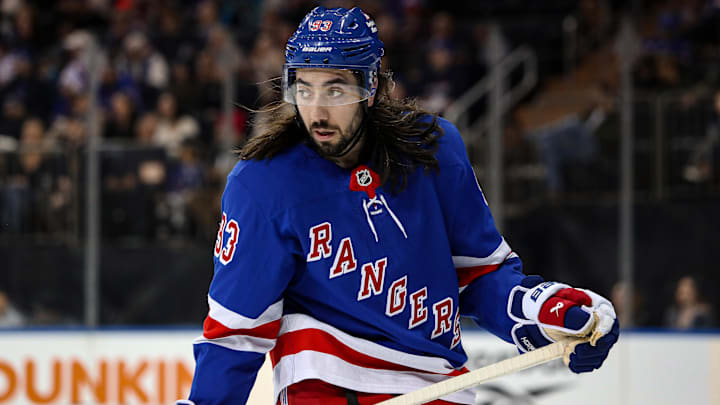
Jonny Brodzinski has two goals in 22 games, Adam Edstrom has two in 24, Conor Sheary has one in 31, and Brett Berard has no points in 11 games. The team has consistently looked one top-six forward short, a role previously filled by Kreider. Cuylle has improved recently, but earlier in the season he struggled in a top-six role and has been far more effective on the third line. That shuffle pushed players like Sheary or Raddysh into bigger roles, with poor results.
Drury could have spent money better
The decision to extend Juuso Parssinen while also signing Raddysh and Sheary remains confusing. Paying Urho Vaakanainen $1.55 million as a seventh defenseman is questionable as well, but the forward spending stands out. Drury allocated $3.525 million to three depth forwards and has seen little return. Using internal options for two of those spots could have freed enough space to pursue a more impactful player in the $2 million range.

Raddysh entered the season with one 20-goal campaign and three seasons of at least 20 points. If the goal was for him to be a younger Sheary, that is defensible. However, signing him for two years, then adding Sheary after already committing to Parssinen and having Edstrom, Sam Carrick, Matt Rempe, and others in Hartford, was highly questionable. The bottom six was not the issue. The top six needed reinforcement, especially as insurance against continued regression and as a replacement for Kreider.
Anthony Mantha stands out as a missed opportunity. He signed a one-year, $2.5 million deal and has 10 goals, 12 assists, and 22 points with the Penguins. He has multiple 20-goal seasons on his resume and would have mirrored previous bets on players like Reilly Smith or Blake Wheeler. Those were calculated risks on proven contributors. This offseason, the Rangers added no one of that profile, and it has cost them.
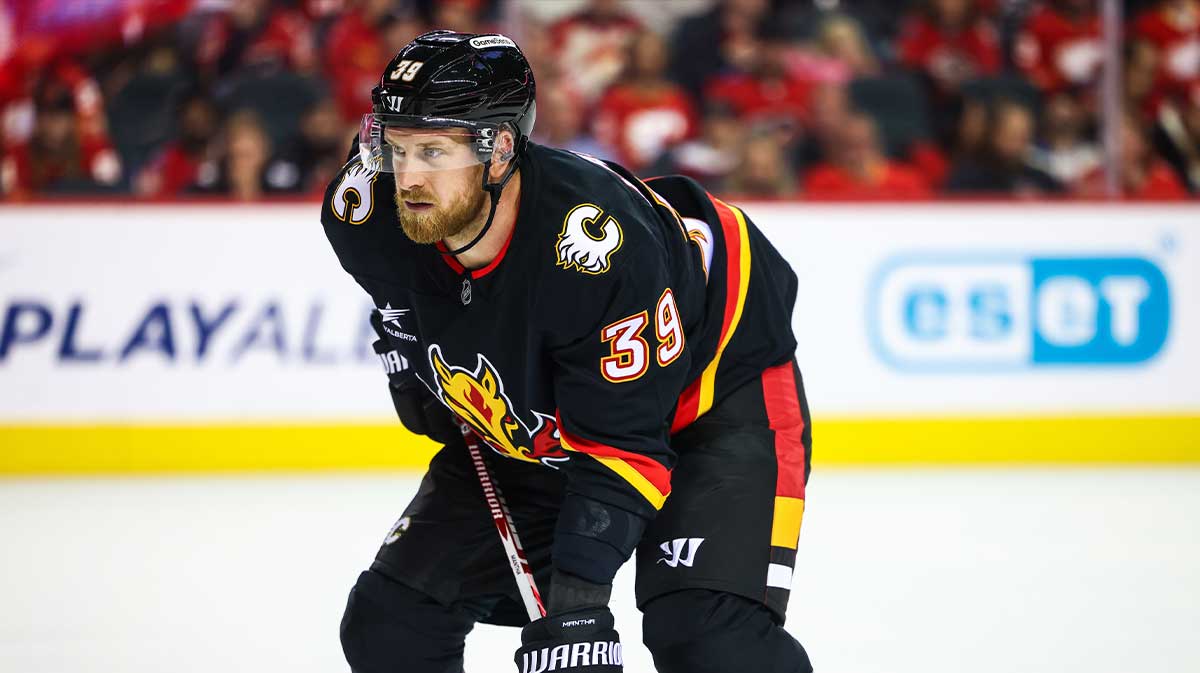
Instead, Drury doubled down on bottom-six depth, an area where the Rangers were already crowded. That strategy has backfired, especially since the goal was to improve on last season. Perhaps Drury expected to land a top-six player later, but many of the top 2026 free agents extended with their teams. Even then, a player like Mantha would have been a sensible middle-ground option who could help immediately. Other possibilities existed as well, such as Jack Roslovic or Andrew Mangiapane. The broader point remains the same: the forward group was not adequately addressed, so the scoring woes should not shock anyone.
Where Rangers go from here
The clearest path forward is moving on from surplus bottom-six pieces and targeting a legitimate top-six forward. Whether that happens remains to be seen. In the short term, recalling Gabe Perreault is an option. He has posted 10 goals, seven assists, and 17 points in 20 games with the Hartford Wolf Pack and could provide a needed spark. Giving him another opportunity might buy time, especially if the Rangers hesitate to add at the deadline and instead consider recouping value by selling veterans like Panarin should they fall out of the playoff race by late February or early March.

The Rangers remain a frustrating team. While these growing pains could pay dividends down the line, the lack of scoring was entirely foreseeable. Drury assembled a top-heavy, aging roster, failed to replace Kreider’s production, and stocked the bottom six with redundant players who do not drive offense. The current standings are no surprise, and if Sullivan is to make a real impact in New York, he needs players capable of finishing.
How the Rangers get there is still uncertain, but action is required soon if they want to avoid missing the playoffs for a second straight season.