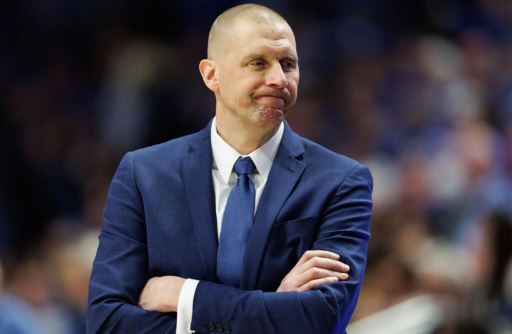
When Will Stein took over in Lexington, he didn’t ease into the role or try to handle everything himself. Even though he had only been a head coach for a short time, he operated with the mindset of a seasoned executive. Stein immediately recognized that competing in the SEC requires more than strong X’s and O’s. It demands structure, delegation, and a forward-thinking approach to roster construction. Rather than attempting to manage every detail alone, he built an infrastructure around himself. That decision is already paying dividends.
Mark Pope, now entering Year 2, has chosen a different route. While Stein invested in a dedicated front office, Pope has leaned heavily on his coaching staff to juggle recruiting, scouting, player development, and roster management. In today’s NIL-driven era, that balancing act has proven increasingly difficult. The contrast between the two approaches has become more noticeable as recruiting battles intensify and roster questions mount.
The ‘do no harm’ trap

Pope has openly discussed his reluctance to immediately hand control to a traditional general manager structure. “We’ve seen places around the country where it’s been an epic disaster, and we’ve seen places where it’s been functional,” Pope said back in December. “When it lands right, we’ll do it. But it’s not something that we want to rush into, because it can be really costly. There’s the do-no-harm vibe.”
That cautious philosophy makes sense on the surface. No coach wants to disrupt culture or introduce instability. But in 2026, standing still can be just as damaging as making the wrong hire. While Pope is weighing potential risks, Stein has embraced the changing landscape. “That’s why I’m hiring a general manager… To help us through this,” Stein said. “You just gotta be adaptable. You know? You gotta be able to change with the times. It is what it is.”
There is something admirable about the all-in, hands-on mentality of a head coach who wants control of every moving piece. Still, the modern college sports model is too complex for one person to manage effectively. Delegating responsibility to someone aligned with the program’s vision is not weakness; it is strategy.
The Jayden Quaintance case study

A clear example of where a true general manager might have altered Kentucky’s trajectory can be found in the Jayden Quaintance situation. Pope made a bold move in pursuing the highly talented big man despite his recovery from an ACL injury.
This is not a criticism of Quaintance’s ability. When healthy, he is an extraordinary prospect with rare physical tools. However, allocating a significant portion of the NIL budget and a roster spot to a teenage player coming off major knee surgery carries substantial risk. Risk assessment is precisely where a GM earns their value.
A dedicated front office executive likely would have consulted extensively with medical professionals, evaluated long-term recovery projections, and weighed the financial implications. That person might have advised a more conservative path, suggesting the program invest in a proven, lower-risk contributor instead.
Pope chose to bet on upside. Many coaches would have done the same. If Quaintance had been fully healthy, nearly every major program would have lined up to sign him. But availability matters. If he cannot return at full strength, the roster construction could suffer as a result.
Looking ahead to 2026 yields more questions than answers
Recruiting momentum for the 2026 class once appeared promising. Tyran Stokes was rumored to be close to committing before Halloween, but that buzz has cooled, with many now viewing Kansas as the favorite.
Christian Collins, the No. 2 player in the 2026 class, also seemed poised to join the fold before circumstances shifted. Geographic ties often play a powerful role in recruiting, and California prospects frequently prefer staying close to home. Collins now appears most likely headed to USC.
Caleb Holt has reportedly narrowed his options, with Arizona and Alabama seen as frontrunners. Jordan Smith is widely expected to land with John Calipari. Brandon McCoy’s focus appears centered on Michigan, Alabama, Arkansas, and Miami.

So who remains?
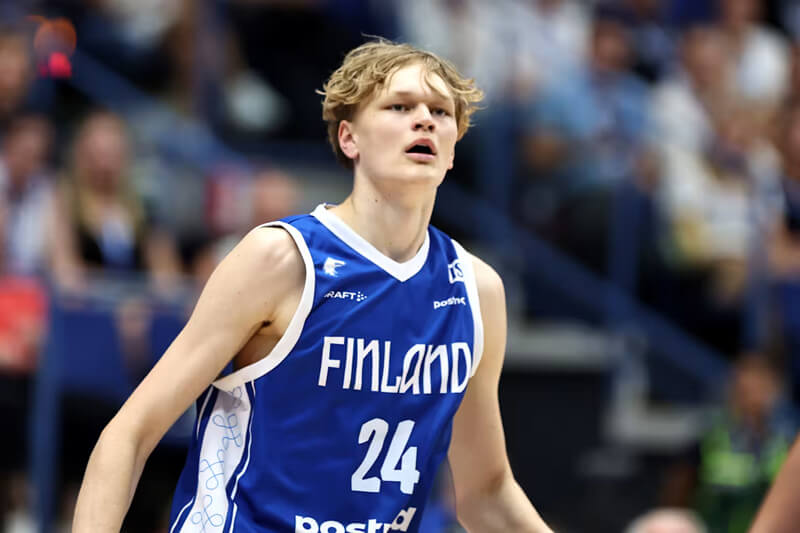
Miikka Muurinen has been in contact with Pope and recently reiterated his goal of playing in the NCAA. However, he is currently competing professionally in Serbia, and ongoing eligibility questions surrounding similar cases could complicate his path. Sayon Keita, a Malian standout playing professionally in Spain, presents a similar uncertainty.
If Kentucky’s class hinges largely on two international prospects facing potential NCAA eligibility hurdles, that is a precarious position given the program’s resources and ambitions. High school recruiting can change quickly, but at the moment, the outlook feels unsettled.
The CEO needs a CFO
A general manager could help address roster imbalance, including depth concerns at point guard. That person could maintain relationships with agents, evaluate transfer portal options, manage NIL negotiations, and build future recruiting boards. The head coach should absolutely retain final authority over personnel decisions. But managing contracts, reviewing medical evaluations, and vetting representation in today’s environment is a full-time job on its own.
Stein recognized that reality before coaching his first game, and it reflects a clear understanding of modern college athletics. Pope remains one of the sharpest basketball minds in the sport. Yet even the best strategists benefit from structural support. The path forward may not require surrendering control, but it likely requires sharing it.