
The excitement surrounding Sebastian Walcott’s rapid rise through the Texas Rangers’ farm system had many believing his big-league debut was not a matter of if, but when. As the organization’s top-ranked prospect, Walcott looked poised to position himself as a potential infield solution as early as 2026. With his rare blend of size, athleticism, and power, the young shortstop/third baseman had become a central figure in the Rangers’ long-term plans — and perhaps even a short-term contingency option if injuries struck at the major league level.
But those plans have now taken a dramatic turn.
According to Evan Grant of The Dallas Morning News, Walcott is set to undergo elbow surgery after suffering a torn UCL, an injury that will likely sideline him for most — if not all — of the 2026 season. The timing is especially crushing for both the player and the organization. Before the setback, there was a realistic chance he could have made his MLB debut next season if Texas found itself needing infield reinforcements. Now, with their No. 1 prospect facing a lengthy recovery, the Rangers must look elsewhere to fill the sizable void his absence creates.
Here are three players who could benefit from Walcott’s injury and step into larger roles in 2026:
1B/2B Justin Foscue
Former first-round pick Justin Foscue has long hovered on the edge of breaking through. Once ranked among MLB Pipeline’s Top 100 prospects prior to 2022, the 26-year-old has yet to secure a lasting role in Arlington. He appeared in just four games in 2025 and 15 in 2024, never quite gaining the extended opportunity many expected when he was drafted in 2020.
While Josh Smith is the likely favorite to open the 2026 season as the Rangers’ starting second baseman, Walcott’s injury could create more room for Foscue to stick in the majors. Texas may have previously envisioned Walcott as the next man up if Corey Seager or Smith were to miss time or regress significantly. With that option off the table, Foscue becomes a far more important piece.
If Seager were to suffer an injury, Smith could slide over to shortstop, leaving second base to Foscue. And if Smith struggles or lands on the injured list, Foscue could step into an everyday role. Even in a platoon capacity, 2026 could finally present the extended MLB runway he has been waiting for.

UTL Ezequiel Durán
Ezequiel Durán has quietly carved out value as a versatile contributor, and Walcott’s absence may further enhance his importance. Though his bat has been inconsistent throughout his career, Durán finished the 2025 season on a strong note. More notably, his defensive growth over the past two seasons has been significant.
Durán’s ability to play nearly every position on the field — aside from catcher and pitcher — makes him an invaluable depth piece. With Walcott no longer an option for 2026, Texas can lean on Durán’s defensive reliability if Seager, Smith, or Foscue miss time. His versatility provides the Rangers with insurance across the infield and even beyond it, giving manager Bruce Bochy flexibility when injuries or performance dips arise.
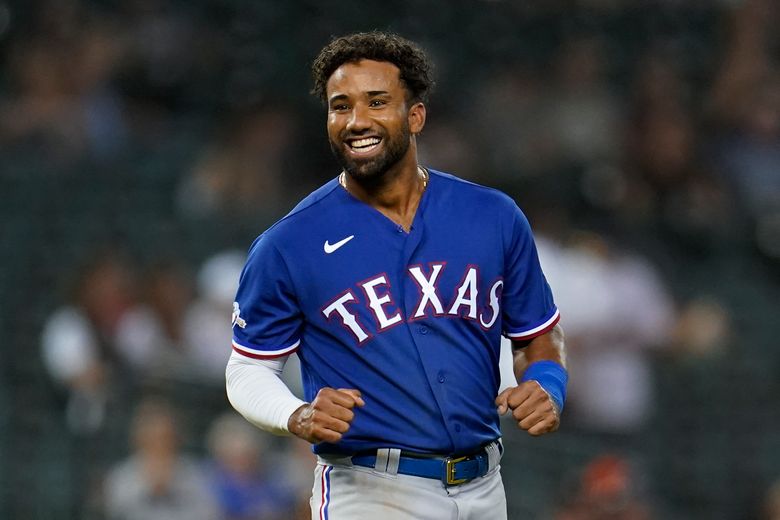
UTL Cameron Cauley
Perhaps the biggest beneficiary of Walcott’s setback is Cameron Cauley. Unlike Foscue and Durán, Cauley had not been firmly projected into Texas’ 2026 big-league plans prior to the injury. Now, his path looks far more realistic.
Cauley, who can handle both middle infield spots as well as the outfield, could emerge as a midseason call-up if the Rangers need help. In 113 games with Double-A Frisco last season, he posted a solid .253/.325/.448 slash line, along with 15 home runs, 26 doubles, seven triples, and 28 stolen bases. His combination of speed, defensive ability, and improving offensive production makes him an intriguing option.
Before Walcott’s injury, Cauley’s odds of reaching the majors in 2026 appeared slim. Now, with Texas suddenly thinner in high-upside infield depth, he has a legitimate opportunity to force his way into the conversation.
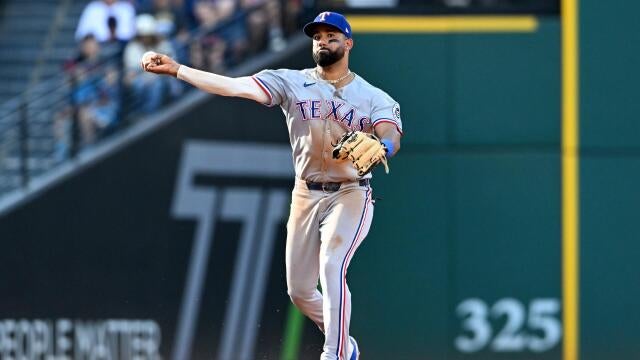
Walcott’s recovery will be the long-term storyline, but in the meantime, the Rangers’ infield picture for 2026 has shifted dramatically. What once seemed like a seamless transition plan now requires adjustments — and for Foscue, Durán, and Cauley, that unexpected change could open the door to meaningful opportunity.