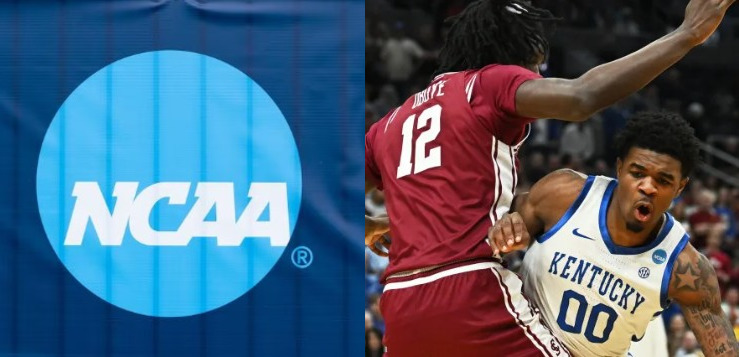
The chaos and brilliance of March Madness delivered yet another unforgettable moment on Friday, as Kentucky found itself at the center of both heroics and controversy. With the season hanging in the balance, the Wildcats needed something extraordinary—and Otega Oweh delivered exactly that.
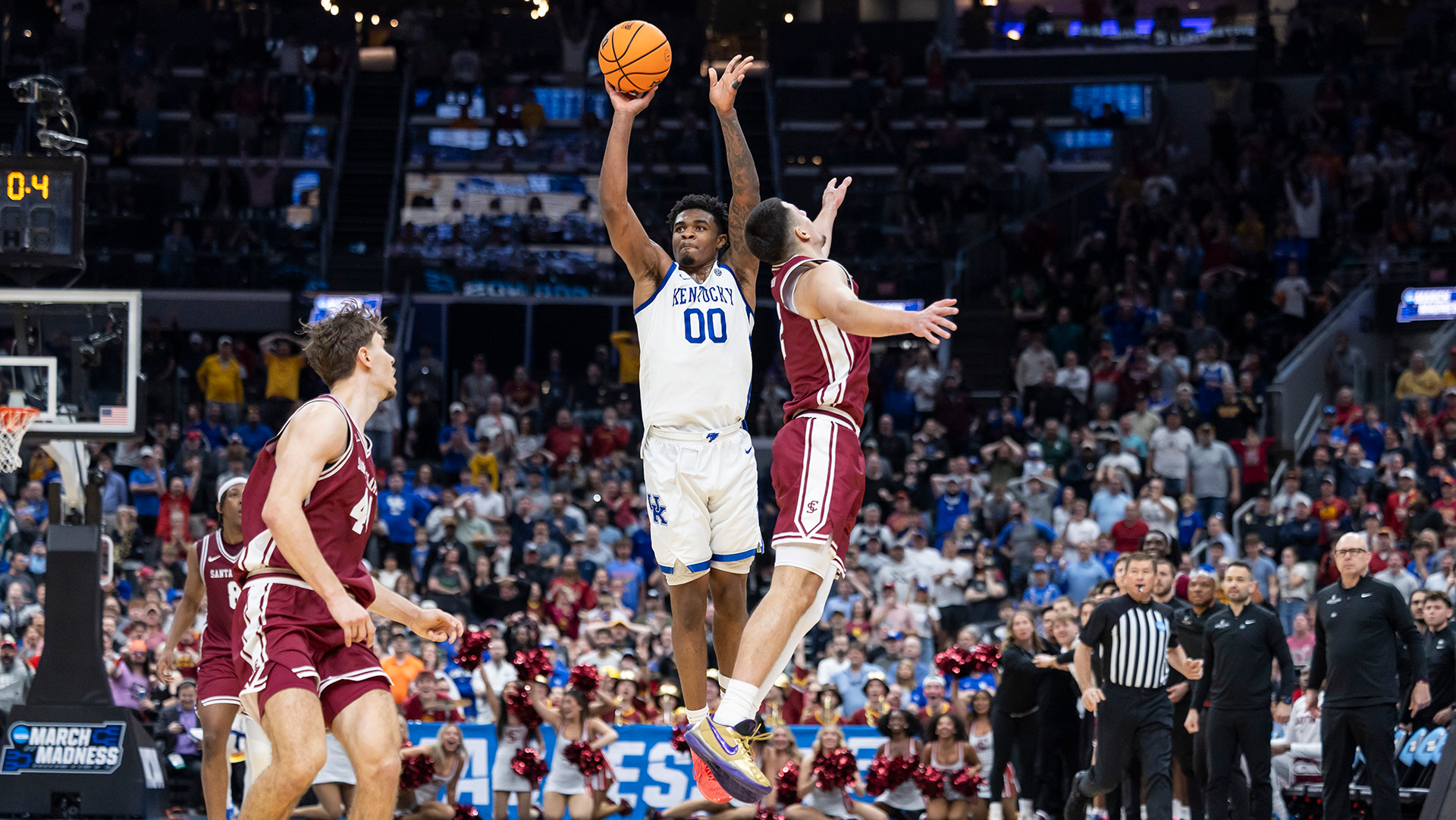
With seconds ticking away and Kentucky trailing by three, Oweh launched a deep, contested 32-footer that splashed through the net, tying the game at 70 and sending the Wildcats bench—and fans everywhere—into a frenzy. It was the kind of shot that instantly becomes part of tournament lore, the type replayed for years whenever March Madness magic is discussed.
But as quickly as the celebration erupted, questions followed.
Just moments earlier, Santa Clara had taken a 73–70 lead thanks to a clutch three-pointer from Allen Graves. As Kentucky scrambled to respond, Santa Clara head coach Herb Sendek was seen emphatically signaling for a timeout from the sideline before the ball was inbounded.
The officials, however, did not grant it.
That decision immediately became the focal point after the game, with Sendek making his frustration clear. “I unequivocally called a timeout. But they didn’t grant it,” he said postgame, still visibly upset about the sequence that ultimately led to Oweh’s game-tying shot.
At first glance, the situation appeared murky—another classic March Madness controversy where split-second decisions can define outcomes. But a closer look at the rules, along with expert insight, quickly clarified the situation.
Former Auburn head coach Bruce Pearl weighed in on the play, breaking down the critical detail that determined everything: possession. According to Pearl, when the ball is still coming through the net after a made basket, neither team has established possession. A timeout cannot be granted during that brief window unless a player clearly controls the ball.
That moment came when Kentucky’s Denzel Aberdeen quickly grabbed the ball and initiated the inbound. From that instant, possession belonged to Kentucky—not Santa Clara.
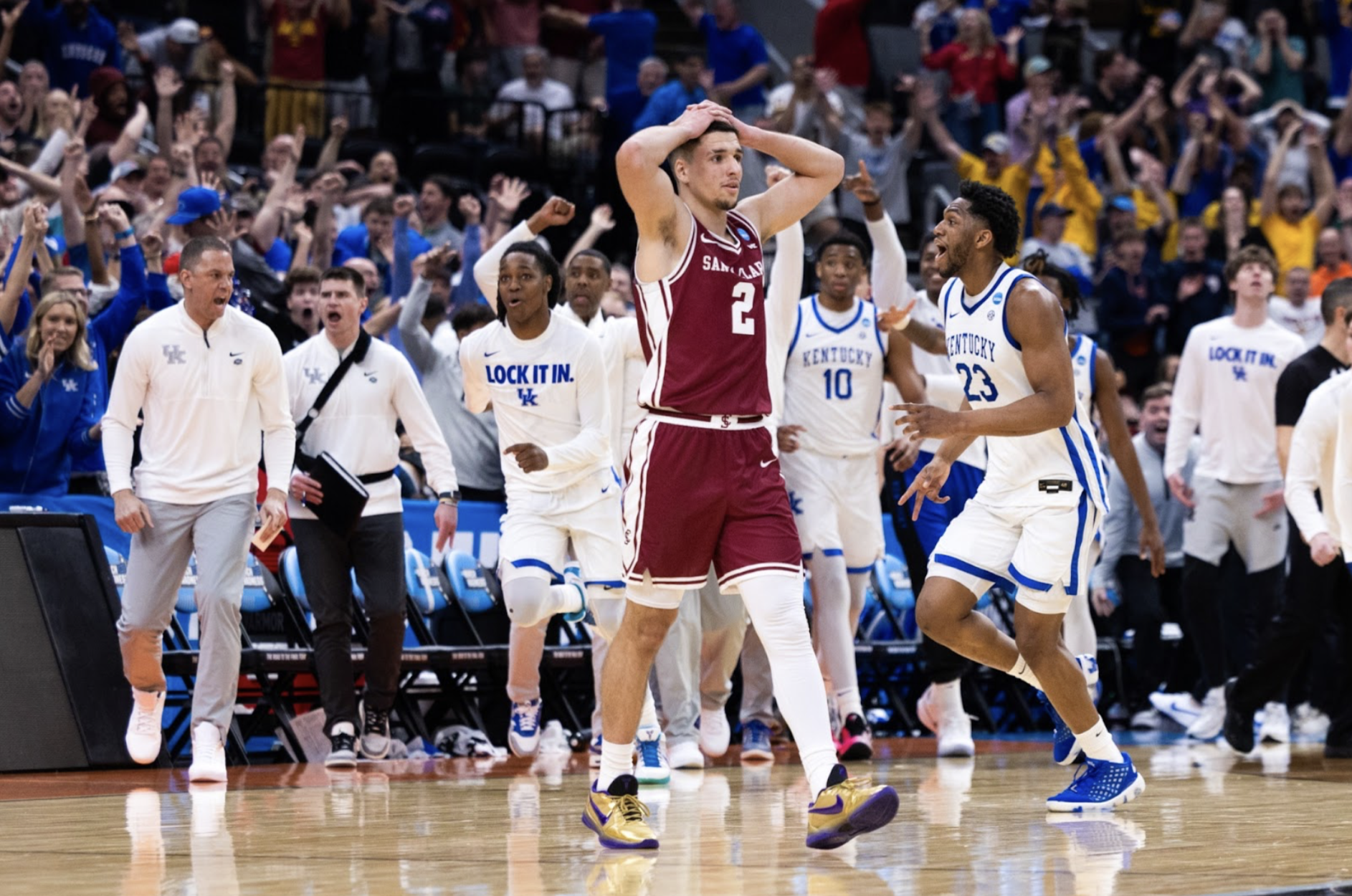
And with that, the opportunity for Sendek to call a timeout disappeared.
The speed and awareness from Aberdeen proved decisive. By immediately taking control and inbounding the ball, he effectively shut the door on any stoppage request from Santa Clara, allowing Kentucky to push the play forward—setting the stage for Oweh’s unforgettable shot.
What initially looked like a missed call by officials was, in reality, a textbook application of the rules. Timing, possession, and awareness all aligned in Kentucky’s favor in one of the game’s most critical moments.
In the end, the controversy fades when the rulebook is applied correctly, and the officials’ decision stands firm.
“The NCAA confirms there was no error on the floor—Santa Clara did not have possession at the moment the timeout was requested, and by rule, no timeout could be granted. The play was officiated correctly, and there is no timeout controversy on review.”