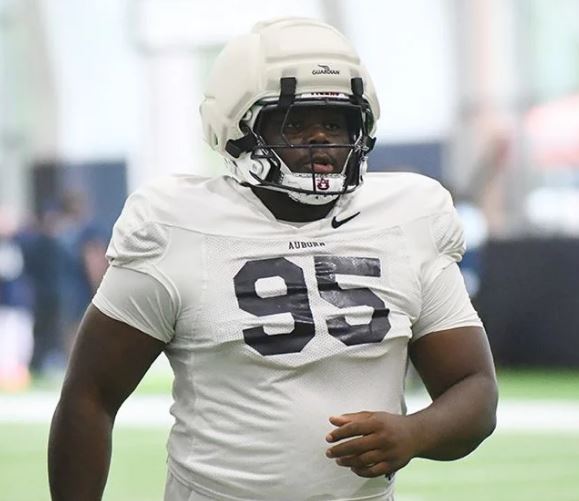
For many college athletes, Name, Image, and Likeness opportunities have opened the door to financial freedom, brand partnerships, and national exposure. For Jourdin Crawford, NIL has meant something else entirely — responsibility. Instead of spending his earnings on himself, the Auburn defensive lineman is investing in the city that raised him, launching a non-profit community hub in his hometown of Birmingham that aims to serve, support, and uplift those who need it most.
Crawford’s project is rooted in personal experience. Growing up in Birmingham, he saw firsthand the gaps that exist in underserved neighborhoods — limited access to safe spaces, technology, food resources, and mentorship. Those memories never left him, even as his football career carried him from high school stardom to the SEC spotlight with the Auburn Tigers. When NIL opportunities began to arrive, Crawford didn’t view them as a reward. He saw them as a tool.
That mindset led to the creation of a non-profit community hub designed to be a safe, welcoming space for people of all ages. The center provides public computers for job applications and schoolwork, quiet areas for studying or meetings, and access to essential resources for families facing financial hardship. It is not built around profit or publicity — it is built around need.
What makes Crawford’s initiative stand out is how intentional it is. This isn’t a symbolic donation or a one-time gesture. It is a physical space, funded largely through his own NIL earnings, meant to operate consistently and grow over time. The hub also plans to host workshops, youth programs, and community discussions that address mental health, career development, and personal growth — topics Crawford believes are just as important as food or technology access.

Those close to Crawford say the project reflects who he has always been. Long before NIL deals entered the picture, he was known for helping younger players, mentoring peers, and staying connected to his neighborhood. His rise as a college athlete never came with the idea of leaving Birmingham behind. Instead, success made him feel more connected to it.
There is a quiet power in what Crawford is doing. At a time when NIL is often debated and misunderstood, his actions offer a clear example of how the new era of college athletics can extend beyond stadiums and stat sheets. His impact is being felt not on Saturdays in the fall, but every day in the lives of people who now have a place to go, learn, and feel supported.
As his football career at Auburn continues to develop, Crawford’s legacy is already taking shape off the field. He is proving that leadership doesn’t require a microphone and that change doesn’t have to wait until a professional contract. For Birmingham, his community hub is more than a building. It’s a reminder that sometimes the ones who make it out are the ones who come back — and bring hope with them.