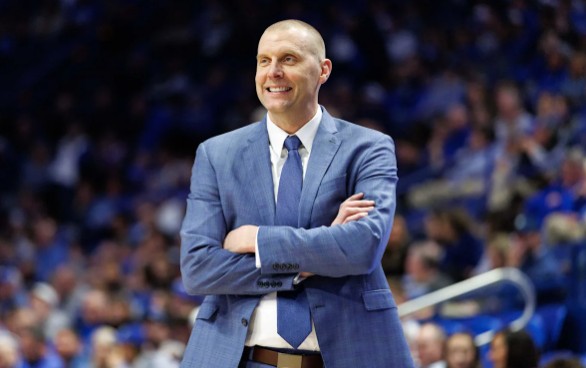
The expectations that come with leading Kentucky men’s basketball are unlike anywhere else in college sports. Every season in Lexington begins with championship aspirations, fueled by a passionate fan base and a program built on decades of excellence. For Mark Pope, stepping into that spotlight meant embracing both the pressure and the promise. But as the 2025 season came to a close, the reality proved far more complicated than the vision many had in mind.
Kentucky’s campaign was defined by inconsistency, adversity, and flashes of potential that never fully materialized into sustained dominance. From the opening months, the Wildcats battled roster instability, with injuries disrupting rotations and forcing constant adjustments. At times, the team showed resilience, grinding out key wins in conference play and remaining competitive against some of the nation’s toughest opponents. Their strength of schedule was among the most demanding, a factor that both tested and revealed the team’s limits.

Despite those challenges, Kentucky managed to secure meaningful victories, including appearances in both the SEC Tournament and the NCAA Tournament. Those moments hinted at what the roster could achieve when healthy and in rhythm. However, the deeper runs many expected never came. The season ultimately ended earlier than hoped, leaving players, coaches, and fans searching for answers.
For a program measured by banners and Final Four appearances, anything short of a championship push can feel like a disappointment. That reality has fueled criticism and debate surrounding Pope’s tenure, especially as comparisons to past Kentucky teams continue to loom large. Yet within the locker room, there remains a sense that the foundation being built is stronger than the results may suggest.
Throughout the season, Pope emphasized growth, culture, and long-term progress. He consistently pointed to the challenges his team faced, particularly the toll injuries took on continuity and development. While those factors do not erase the sting of an early exit, they provide context to a season that was far from straightforward.
As the dust settles, Pope addressed the narrative surrounding his time with the Wildcats, offering a candid assessment that reflects both accountability and belief in the direction of the program.

“If you take the four years before we got here, and the two since we’ve been here, we have a higher winning percentage.”
It’s a statement that underscores his confidence in the progress being made, even if it hasn’t yet translated into the ultimate prize. Pope did not shy away from acknowledging the gap between expectations and reality, making it clear that the standard at Kentucky remains unchanged.
“We haven’t met our goals, clearly, but we are making progress.”
Those words carry weight in Lexington, where patience is often in short supply. Still, they also hint at a broader vision—one that extends beyond a single season’s disappointment.
In the end, Kentucky’s year will be remembered as one of missed opportunities, but also as a chapter in a larger rebuilding story. The question now is whether that progress Pope speaks of will soon turn into results that satisfy one of college basketball’s most demanding fan bases.