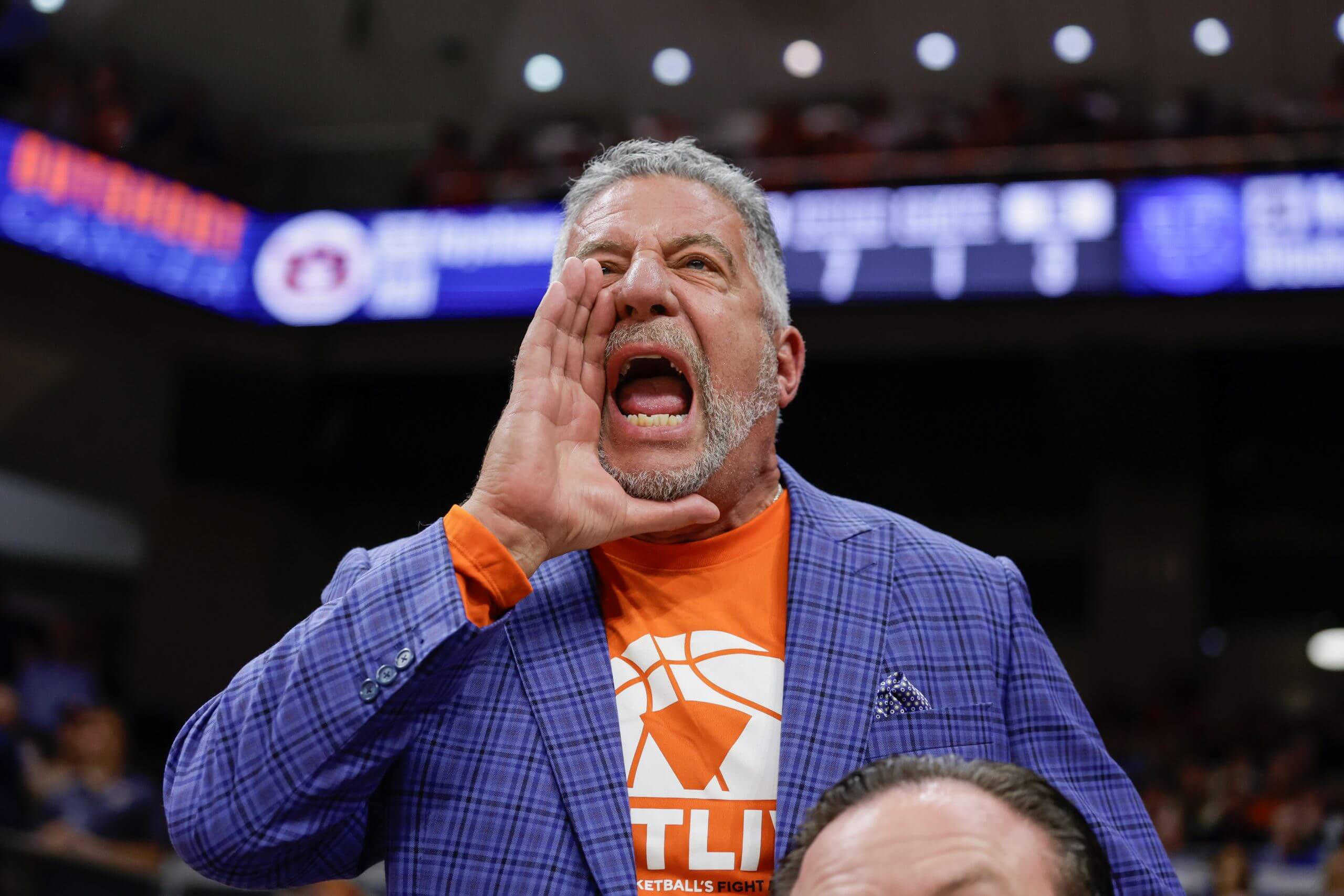
For much of the last decade, Auburn basketball has been viewed as one of the most exciting programs in college basketball, capable of producing unforgettable tournament runs, elite recruiting victories, and some of the loudest atmospheres in the Southeastern Conference. Under Bruce Pearl, the Tigers transformed from a program fighting for relevance into one that regularly entered national conversations, reached deep postseason stages, and developed a reputation for fearless offensive basketball. Yet even during the years when Auburn appeared closest to joining the sport’s true elite permanently, one issue kept resurfacing whenever the stakes rose — a defensive inconsistency that repeatedly created problems in games where margins were thin and every possession mattered.
This season has once again brought that issue into sharper focus. Auburn entered the year believing it had enough scoring talent and depth to remain competitive against some of the nation’s strongest teams, and there were stretches when that belief looked justified. The Tigers often pushed tempo, generated points quickly, and forced opponents into uncomfortable offensive races. But the same games that highlighted Auburn’s offensive potential also exposed defensive vulnerabilities that turned promising nights into frustrating defeats. Instead of securing a comfortable path into the NCAA Division I Men’s Basketball Tournament, Auburn finished with a record that left the program on the outside looking in, eventually landing in the National Invitation Tournament despite entering key weeks of the season with realistic hopes of extending its NCAA streak.
The frustration surrounding that outcome has only grown because Auburn’s scoring numbers suggested a team capable of more. The Tigers averaged more than 82 points per game for much of the season, often matching or exceeding opponents offensively even against strong competition. Guards created offense in transition, perimeter shooting opened stretches where Auburn looked dangerous, and there were multiple games where the Tigers seemed to control momentum early. Yet defensive lapses repeatedly erased those advantages. Opponents found open driving lanes, second-chance opportunities became costly, and late possessions often turned into uncontested baskets at the worst possible moments. Fans had been pointing to that exact pattern for months, and now even the coaching staff has openly acknowledged it.
Bruce Pearl addressed the concern directly in remarks that immediately caught attention across the Auburn fan base: “Obviously, we aren’t a good defensive team. That’s something that we’ve got to improve in the offseason. We’ve just got to find ways of trying to limit teams from scoring more points.” That statement, simple but striking, represented one of the clearest admissions yet that Auburn’s biggest long-term obstacle has not been offensive talent or effort, but an inability to consistently defend at the level required to survive in championship-level basketball. It also reflected a reality that statistics have supported all year — Auburn has allowed nearly 80 points per game, placing the Tigers far below the defensive standard usually associated with teams expecting serious March success.
That weakness became especially costly during difficult stretches of conference play. Against elite SEC opponents, Auburn frequently found itself in games where offensive production should have been enough to stay in control, only for defensive breakdowns to completely shift momentum. In both meetings with Alabama Crimson Tide men’s basketball, Auburn struggled to contain perimeter movement and transition attacks, allowing scoring bursts that proved difficult to recover from. During a February losing stretch, opponents consistently pushed Auburn beyond comfortable defensive limits, and even when the Tigers answered offensively, they rarely found enough stops to close games. That pattern became the defining difference between Auburn staying safely inside the NCAA field and being pushed into postseason uncertainty.
The contrast with Auburn’s strongest seasons under Pearl has made the current defensive issue even more noticeable. When Auburn made deep tournament runs in previous years, defense often created the foundation for everything else — pressure on the perimeter, physical rebounding, and quick reactions that generated transition scoring. Even when the offense had cold stretches, those teams usually remained competitive because they could disrupt opponents consistently. This year’s group has often looked dangerous offensively but vulnerable whenever games slow down and possessions become more physical. That imbalance has made Auburn entertaining, but also unpredictable in ways that cost the team badly during the most important parts of the season.
Now the conversation inside the program shifts toward what comes next. Auburn still has an opportunity to salvage momentum through postseason play, but Bruce Pearl’s comments suggest the offseason will focus heavily on restoring defensive identity above all else. Recruiting priorities, player development, and roster decisions are likely to center around adding length, toughness, and discipline in areas where Auburn repeatedly fell short. For a program that still believes it belongs among college basketball’s national contenders, the message is clear: until Auburn defends with greater consistency, the Tigers may continue producing exciting moments without fully reaching the championship level the program has spent years chasing.