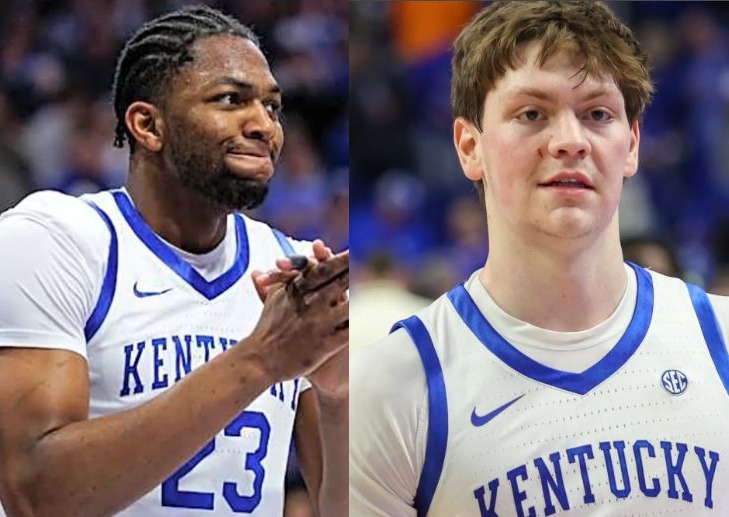
Pressure has never felt heavier in Lexington. The patience is gone, the margin for error is razor thin, and the expectations remain exactly where they’ve always been—championship level or else. Year 3 is no longer about vision, culture, or long-term plans. It’s about results. Blowout losses, stunned home crowds, and a win total that simply doesn’t meet the Kentucky standard have changed the conversation entirely. This offseason isn’t just important—it’s defining. Every roster decision matters, every role counts, and every mistake could be fatal. And for Kentucky to get this right, two overlooked pieces may determine everything.

Mark Pope is heading into a massive Year 3 in Lexington, and there’s no sugarcoating the stakes. If he misses on this roster build, next season could very well be his last. That’s simply the reality of modern college basketball—especially at Kentucky. You don’t survive losing 26 games across two seasons, many of them ugly blowouts, in this market.
Those lopsided losses and damaging home defeats have raised the bar even higher. Pope doesn’t just need improvement—he needs near-perfection. And that starts with prioritizing two very specific players: Mo Dioubate and Trent Noah.

Why Mo Dioubate matters
Dioubate arrived from Alabama and quickly earned the trust of Big Blue Nation with his effort and physicality. In roughly 21 minutes a game, he gave Kentucky solid production—around eight points, five rebounds, strong defense, and nonstop energy. He competed every possession. The issue, however, was obvious: the shooting. Going 6-of-28 from three simply can’t happen, especially when you’re shooting over 50% overall. His value is clearly closer to the basket.
Still, what makes Dioubate essential can’t be found in a stat sheet. There’s never a moment when he’s not playing at full throttle. His skill set may have limits, but the things he does well can’t be taught or faked. That relentless motor, physical toughness, and willingness to do the dirty work are invaluable. Every winning roster needs a player like that.
Trent Noah’s impact goes deeper than people think
Trent Noah is important too—but not for the reasons many assume. Years ago, a third-year junior in the same system at the same school would be an automatic cornerstone: experienced, trusted, and primed for a leap. Instead, some dismiss Noah as more of a mid-major-level player, which ignores how much he actually brings to the table.
Last season, Kentucky’s offense often stalled because the ball stuck. Possessions bogged down, movement disappeared, and it played a major role in late-game collapses like the Iowa State loss. When Noah is on the floor, that changes. He moves the ball willingly, makes quick decisions, and keeps the offense flowing. He also attacks the glass relentlessly—an effort-based skill you simply can’t teach.
Yes, there are concerns. He struggles defensively at times, lacks elite quickness, and isn’t a top-tier athlete. But watch what happens offensively when he plays. The spacing improves. The ball moves. Teammates get better looks. Part of that is the respect defenses give his shooting, even if it dipped last year. A bigger part is his unselfishness and commitment to team basketball.
Noah wants to win. He’s willing to do whatever the team needs, even if it doesn’t show up in headlines or box scores. That mindset matters—especially at Kentucky.
Why both are essential
Dioubate and Noah embody the traits this next Kentucky roster must have: effort, toughness, selflessness, and buy-in. They play to win, not for individual agendas. You can never have too many players like that, because their attitude spreads.
If Kentucky builds a roster full of players who care, compete, and commit, special things can happen. And frankly, Kentucky is overdue for something special.