
Auburn has delivered another eye-catching recruiting victory, securing a commitment from one of the most coveted running backs in the 2027 class. For the Auburn Tigers football, this isn’t just another addition—it’s a statement about how aggressively they’re approaching the future. The decision caught many recruiting observers off guard, particularly because several traditional powerhouses had been deeply involved and were widely believed to be in stronger position late in the process. Yet Auburn’s staff operated with patience, building relationships steadily behind the scenes rather than chasing headlines. That approach, often overlooked in the fast-moving world of recruiting, proved decisive. By the time the announcement arrived, Auburn had quietly positioned itself as the most trusted and consistent option, turning what looked like a long shot into a major early win that immediately strengthens the perception of their 2027 class.
The commitment also signals Auburn’s intent to stack elite talent early and avoid playing catch-up later in the cycle. In today’s recruiting landscape, where momentum can define entire classes, getting a cornerstone player at a premium position sets the tone for everything that follows. The coaching staff has clearly identified the type of running back they want leading their offense in the coming years—someone with size to handle SEC physicality, the explosiveness to break big plays, and the long-term upside to develop into a featured weapon. This addition checks each of those boxes convincingly. More importantly, it aligns with Auburn’s broader offensive vision, which centers on balance and versatility. By securing a high-upside back this early, they’re not just filling a need—they’re laying the groundwork for a system that can evolve and remain dynamic against top-tier defenses.
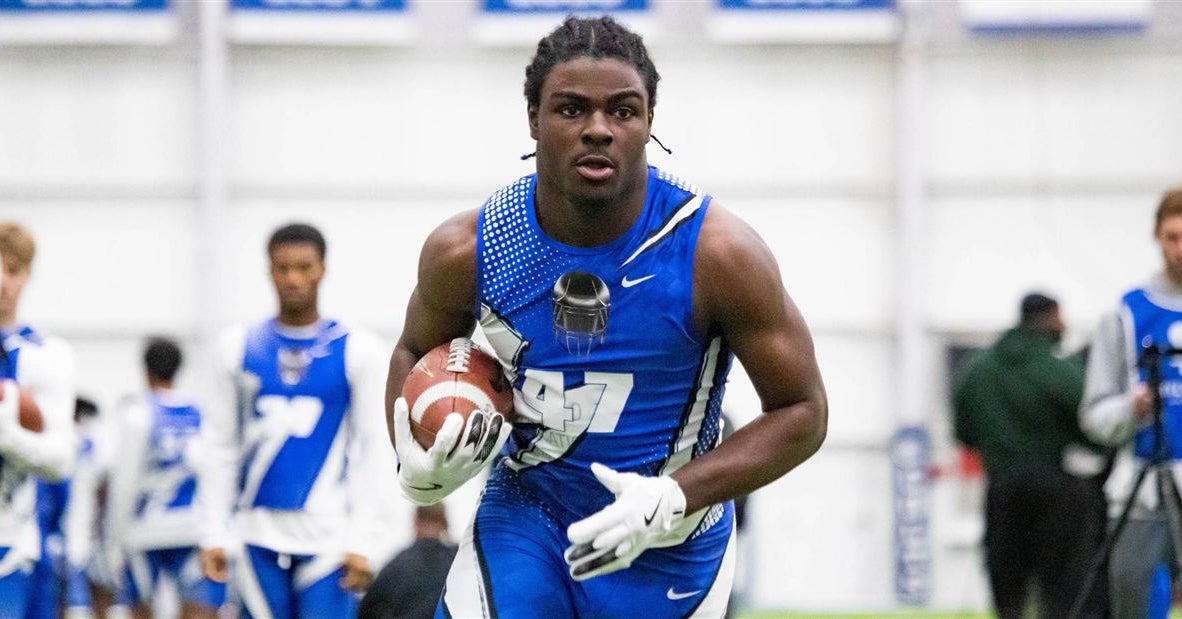
The player at the center of the announcement is Myson Johnson-Cook, a 4-star standout from East St. Louis, Illinois who has steadily climbed recruiting boards with his physical, no-nonsense running style. Johnson-Cook has built his reputation on being a downhill force, combining a powerful frame with surprising acceleration once he hits open space. Defenders often find themselves in difficult positions—either meet him head-on and absorb the contact or risk watching him burst past them into the second level. His contact balance stands out immediately on film, as he consistently bounces off would-be tacklers and keeps plays alive. As his development continues, so has his production, and that upward trajectory has made him one of the most intriguing and closely watched backs in his class.

Recruiting insiders pointed to a late surge from multiple programs, particularly within the Southeastern Conference, where physical running backs are always in high demand. Several schools made strong pushes in the final stretch, hoping to sway Johnson-Cook with tradition, exposure, or immediate opportunity. Programs outside the conference also entered the mix, attempting to shift momentum with alternative pitches. Despite that noise, Auburn maintained a steady presence throughout the process. Their communication never wavered, and their vision for his role remained clear from start to finish. That consistency ultimately became a differentiator. While other programs pitched possibilities, Auburn presented a defined plan—how he would be used, how he would develop, and how he could fit into the future identity of the offense. That clarity resonated and played a major role in locking down the commitment.
On the field, Johnson-Cook brings a physical presence that naturally complements Auburn’s identity. He shows patience pressing the line of scrimmage, allowing blocks to develop before committing to his lane, but once he makes that decision, he accelerates with authority. His burst through the hole forces defenders to react quickly, and his strength allows him to finish runs falling forward more often than not. Beyond his rushing ability, there are encouraging signs in his evolving skill set—particularly as a receiver out of the backfield. As he continues to refine those aspects, he projects as more than just a traditional early-down back. Instead, he has the tools to become a complete offensive weapon, capable of staying on the field in multiple situations and creating matchup problems for opposing defenses.

With this commitment now secured, Auburn adds a major building block to its 2027 recruiting class and gains valuable early momentum. High-profile pledges like this often have a ripple effect, drawing attention from other top prospects who want to be part of a rising class. Offensive recruits in particular may see Johnson-Cook’s commitment as a sign of stability and opportunity, potentially accelerating Auburn’s efforts to assemble a cohesive unit for the future. More than anything, this move reinforces a clear message: Auburn isn’t just competing in recruiting battles—they’re winning them against elite competition. And as the class continues to take shape, this early victory could prove to be one of the foundational moments that defines the Tigers’ long-term trajectory.