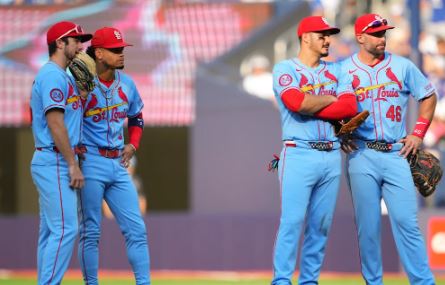
The first half of the 2026 MLB season has been nothing short of a pleasant surprise for the St. Louis Cardinals and their fan base.
Heading into the All-Star break, the Cardinals own a 50-45 record and sit third in the National League Central. Although they trail the division-leading club by 8½ games, they’re only one game out of a National League Wild Card berth, keeping them firmly in the postseason conversation. Interestingly, St. Louis also stood at 50-45 after 95 games a year ago, but this season’s success has come under dramatically different circumstances.

During the offseason, the Cardinals committed to a new direction by moving on from several veteran stars, including Nolan Arenado, Brendan Donovan, Sonny Gray, and Willson Contreras. Those departures led many around baseball to predict that St. Louis would struggle through a rebuilding year and finish near the bottom of the National League standings. Instead, the Cardinals have exceeded virtually every expectation, relying on younger talent and strong organizational depth to remain in playoff contention.
The first half has provided plenty of reasons for optimism, but it has also exposed areas that still need improvement. With the All-Star break offering a valuable opportunity to regroup, the Cardinals must address some lingering concerns if they hope to sustain their momentum over the final stretch of the season. Near the top of that list is the starting rotation, where the inconsistency of Matthew Liberatore has become an increasingly important storyline.
Matthew Liberatore Could Hold the Key to the Second Half
Liberatore opened the season as the Cardinals’ Opening Day starter, a clear sign of the organization’s confidence in him. However, his overall production hasn’t matched those expectations. Through 19 starts, the left-hander owns a 5.00 ERA, and his uneven performances have created uncertainty about what the Cardinals can expect from him moving forward.
To his credit, Liberatore finished the first half on a positive note. In his July 11 outing against the Atlanta Braves, he delivered one of his best performances of the season, throwing six scoreless innings while looking much more like the pitcher who impressed during the early weeks of the campaign. The outing offered hope that he may have turned a corner, but it also raised an important question: which version of Liberatore will show up after the All-Star break?
That uncertainty stems from a difficult stretch that preceded his bounce-back performance. Between June 6 and July 5, Liberatore struggled mightily, posting a 7.71 ERA over 25⅔ innings across six starts. During that span, opposing hitters consistently found success against him, placing additional strain on a Cardinals pitching staff that otherwise performed well enough to keep the team in contention.
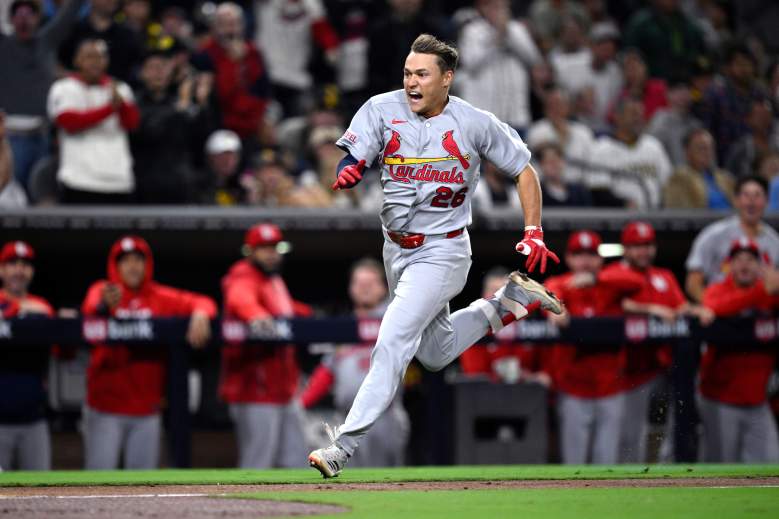
If the strong outing against Atlanta proves to be the beginning of a turnaround, the Cardinals’ rotation could receive a significant boost for the second half. But if his earlier struggles continue, the club may have little choice but to explore other options.
Fortunately for St. Louis, there are several intriguing alternatives waiting in the wings. Top pitching prospect Quinn Mathews continues to develop at Triple-A and appears to be one of the most MLB-ready arms in the organization. Hunter Dobbins could also emerge as a viable replacement if an opportunity arises. Meanwhile, highly regarded No. 4 prospect Jurrangelo Cijntje recently earned a promotion to Triple-A, and while he may still need additional seasoning, a strong finish in the minors could put him in the conversation for a late-season call-up.
As the Cardinals prepare for the second half, few players will be under a brighter spotlight than Liberatore. The club has proven it can exceed expectations despite a dramatic offseason overhaul, but maintaining that success will require consistency from every member of the rotation. If Liberatore rediscovers the form he showed earlier in the year—and in his most recent start against Atlanta—the Cardinals will be in a much stronger position to remain in the playoff race. If not, St. Louis may be forced to make a difficult decision in hopes of preserving its postseason aspirations.