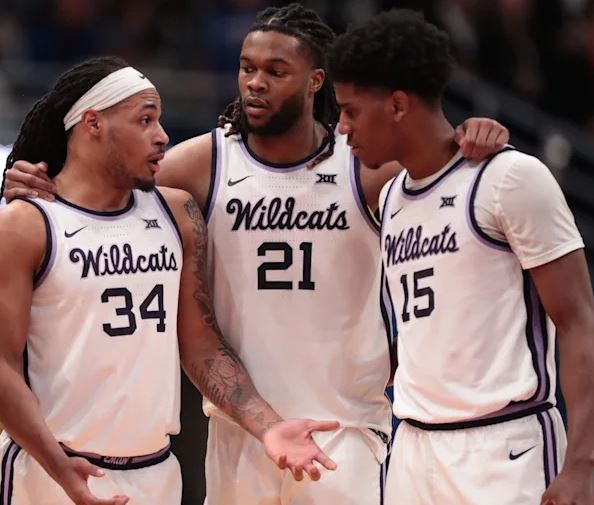
Former Jerome Tang, the head coach of the Kansas State Wildcats men’s basketball, clearly had a plan when he recruited guards P. J. Haggerty and Nate Johnson to lead the Wildcats’ backcourt. While Kansas State’s overall record might not fully reflect progress, the individual performances and statistical output from the two guards suggest the team has taken meaningful steps forward.
If the Wildcats hope to challenge their biggest rival, the Kansas Jayhawks men’s basketball, their chances will largely depend on slowing down two of the Big 12 Conference’s most dangerous players.
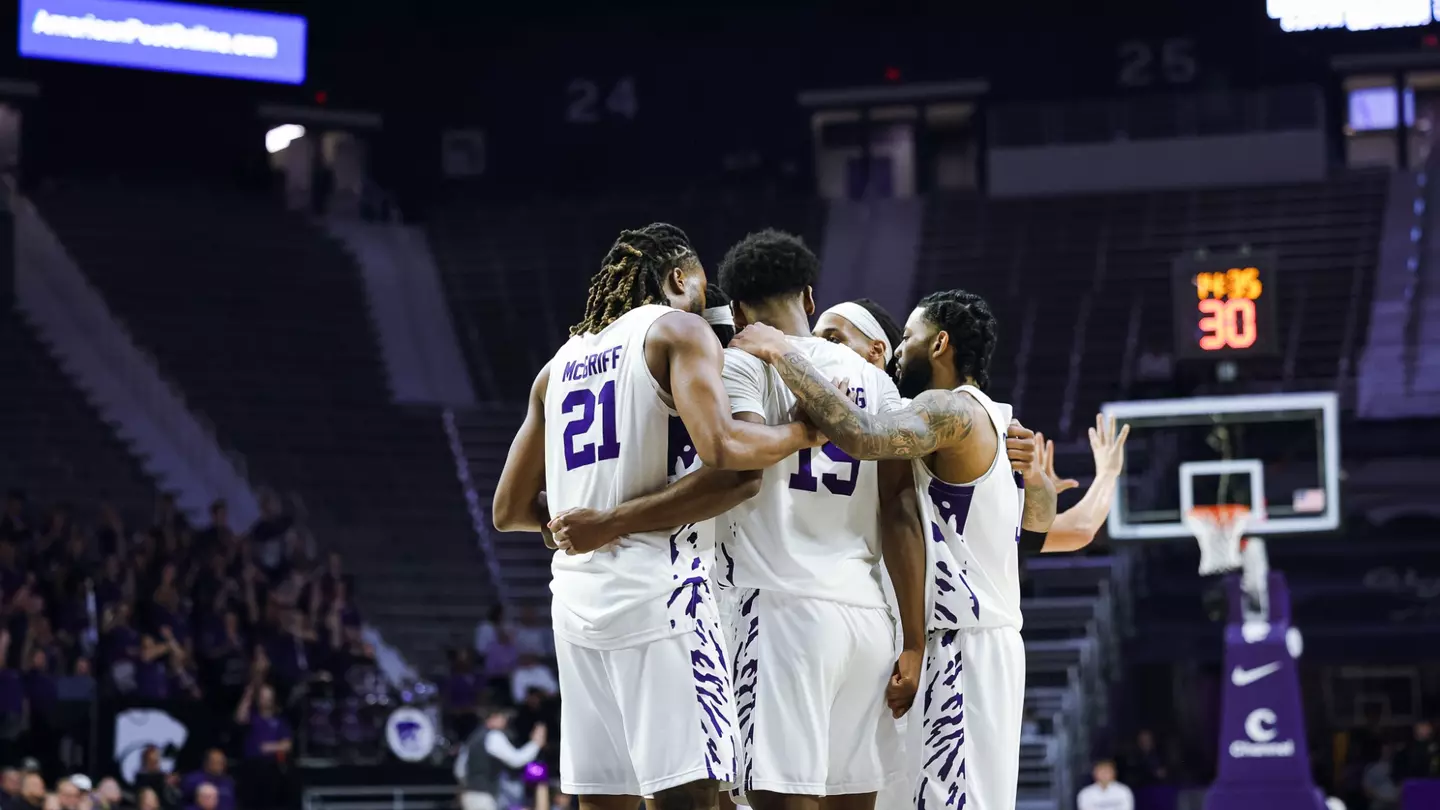
Wildcats Guards Face Major Test Against Kansas Stars
Haggerty enters the rivalry matchup as one of the most prolific scorers in college basketball. Ahead of Saturday’s showdown with Kansas, he ranks fourth nationally in scoring, trailing Daeshun Ruffin of Jackson State Tigers men’s basketball, Jordan Riley from East Carolina Pirates men’s basketball, and A. J. Dybantsa of BYU Cougars men’s basketball.
Haggerty leads Kansas State by a wide margin with 23.3 points per game, despite missing Tuesday’s game against the West Virginia Mountaineers men’s basketball. Before that absence, he had been the Wildcats’ leading scorer in 18 straight games, reaching 20 or more points in 14 of those contests.
Johnson Adds Firepower to Wildcats Backcourt
Haggerty isn’t the only Kansas State guard making headlines. Senior guard Nate Johnson recently delivered a career-high 34 points against the Baylor Bears men’s basketball. That performance marked the first time since 2008 that two Wildcats players scored 30 or more points each in the same game, highlighting how dangerous the backcourt duo can be when both are firing.
Those types of performances don’t happen by chance. Even without Tang actively guiding the program day-to-day, the impact of his recruiting decisions is becoming increasingly clear.

Defensive Challenge Against Kansas
Still, putting up big numbers will be essential against Kansas, especially with standout Jayhawks Darryn Peterson and Melvin Council Jr. leading the way.
Rivalry games with Kansas demand more than just scoring—they put immense pressure on the backcourt to perform on both ends of the floor. While teams have shown they can make three-pointers against Kansas, as Cincinnati Bearcats men’s basketball demonstrated, winning in Allen Fieldhouse often comes down to capitalizing on the Jayhawks’ cold stretches and minimizing mistakes.
Kansas State used a similar formula against Baylor: hit perimeter shots, defend the arc aggressively, and maintain discipline on offense. Applying that same approach against Kansas will be crucial.
Containing Peterson and the Jayhawks
Peterson is the only Kansas starter approaching 20 points per game, making him the primary scoring threat. Meanwhile, Council remains a dangerous playmaker capable of creating opportunities for teammates with his passing.
If Peterson finds a rhythm early and gets the freedom to operate, the game could quickly swing in Kansas’ favor. Kansas State will need to defend the three-point line effectively and stay glued to both Peterson and Council throughout the game.
Health in the frontcourt will also matter. If center Dorin Buca is healthy enough to handle the size of Kansas big man Flory Bidunga, the Wildcats may be able to keep the matchup competitive.
By controlling the perimeter and limiting Kansas’ key playmakers, Kansas State can keep the rivalry game tight—at least through the first half.