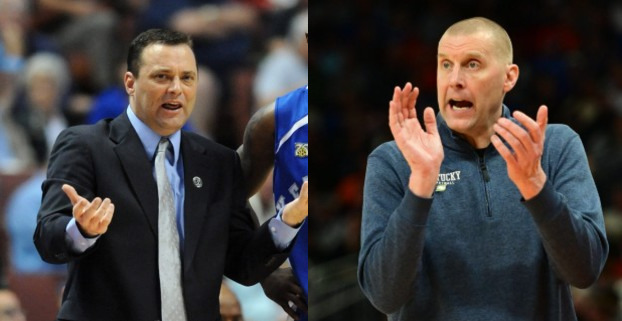
As Mark Pope works to keep Kentucky’s season alive in Nashville, former Wildcat Perry Stevenson has unexpectedly reignited debate about one of the program’s most controversial former coaches, Billy Gillispie.
While most of Big Blue Nation is focused on Kentucky’s third meeting with Florida this season, Stevenson took to social media to push back against critics of his former coach. The former Kentucky big man stirred up conversation online with a blunt defense of Gillispie, delivering a simple two-word response to skeptics.
Stevenson’s message was direct: “You’re wrong.”
Many fans remember the “Clyde” era primarily for grueling practices and disappointing NIT appearances. But Stevenson offered a different perspective, explaining why he still believes Gillispie was actually a “good coach.”
The Ghost of Billy Gillispie Looms Over Mark Pope
Back in 2007, athletic director Mitch Barnhart hired Billy Gillispie after Tubby Smith left for Minnesota. At the time, the move appeared promising. Gillispie had built a reputation as a program-turnaround specialist.
At UTEP, he transformed a six-win team into a 24-win squad that captured a conference title and earned an NCAA Tournament bid the following season. After that success, he moved to Texas A&M.
The Aggies had gone winless in Big 12 play the year before he arrived. In his first season, Gillispie turned them into a 21-win team. Just two years later, Texas A&M came within one point of reaching the Elite Eight. Ironically, that heartbreaking loss came against John Calipari’s Memphis team—the coach who would eventually replace Gillispie at Kentucky.
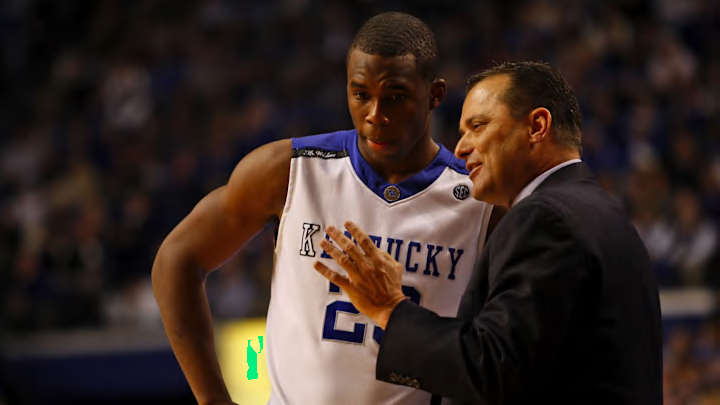
Stevenson tried to clarify his stance while acknowledging Gillispie’s flaws.
“Let me clear something up,” Stevenson tweeted. “If anyone thinks BCG wasn’t a good bball coach, you’re wrong. Ppl skills, not good. Coaching? Yeah, he could do that.”
When Gillispie was first introduced at Rupp Arena, the reception was electric. The crowd gave him a massive ovation, and many believed he was the right man for the job.
But things unraveled quickly. Off-court complications—including a messy contract situation and high-profile legal issues—combined with his intense coaching style to create a toxic environment. Just two years later, the era ended in chaotic fashion, highlighted by the now-famous moment when reporter Alan Cutler chased Gillispie through the facility.
The Mark Pope Parallel
Fast forward to today. Kentucky enters the SEC quarterfinals with a 21–12 record as the No. 9 seed, and some fans have begun making a risky comparison: that Mark Pope might be another version of Billy Gillispie.
The numbers from their first 50 games look remarkably similar—both coaches started 33–17. Each arrived with a reputation for turning programs around, and both have led teams capable of thrilling wins one night and frustrating losses the next.

“Wanna know what made practice so long?”
Stevenson didn’t stop at simply calling Gillispie a good coach. He also shed light on the reason behind those notoriously long practices.
“Wanna know what made practice so long? We went over specific situations bc he watched film of the opp’s last 10 games,” Stevenson explained. “Crazy part is, a large majority of the situations always played out in the games. There’s a reason we went 12-4 in the SEC w/ a chance to win it his 1st year.”
Stevenson’s argument highlights an important point. On the court, Gillispie was widely respected for his tactical preparation. His track record shows he knew how to engineer quick turnarounds at struggling programs.
The problem wasn’t strategy—it was sustainability away from the court.
Billy Gillispie Is a Cautionary Tale
In many ways, Gillispie’s tenure at Kentucky remains a lesson in how quickly things can collapse when off-court turmoil overwhelms on-court ability.
Stevenson’s defense suggests the coaching talent was always real.
Now, as Kentucky prepares for its matchup with Florida, Mark Pope has a chance to show he can succeed where Gillispie could not—balancing elite basketball strategy with the pressure and expectations that come with leading the Wildcats.
Gillispie may serve as a cautionary tale, but Stevenson’s message remains clear: the man could coach.