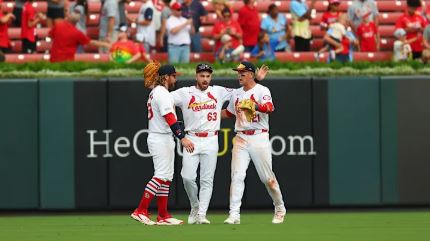
The St. Louis Cardinals have had a rough start to the season, and fan frustration is quickly turning into anger directed at the organization. Even though the team warned ahead of time that 2025 would be a transitional year, it’s still difficult to watch a Cardinals squad appear so uncompetitive this early. Despite most of the roster returning from an 83-win season, the team was counting on key players to take the next step and others to maintain last year’s production — neither of which has fully materialized.
Right now, the Cardinals are sitting in fourth place in the NL Central and have a dismal 2-11 record on the road. The bullpen is largely responsible for at least four of those losses, while other defeats have come from untimely hitting or one disastrous inning. The season-opening sweep of the Twins already feels like a distant memory, and this team is starting to resemble the .500-caliber group that many expected. As for those pointing fingers at manager Oli Marmol, this isn’t the place. I believe he’s doing the best he can with the roster the front office gave him, and his recent comments about the bullpen reflect a level of honesty that fans should appreciate.
Alec Burleson
One of the players who deserves some of the blame for the team’s early-season woes is Alec Burleson. Heading into the season, it was reasonable to expect Burleson to take the lead role as designated hitter — or at least serve as the strong side of a platoon, occasionally filling in at first base. His defensive skills in the outfield have improved but still fall short, especially with more capable defenders like Lars Nootbaar, Victor Scott II, Michael Siani, and Jordan Walker on the roster.
In 2024, Burleson had a solid offensive season, batting .269 with 21 home runs and a team-best 78 RBIs — numbers that earned him a slightly above-average 106 wRC+. Though his game has always been offense-first, there was hope that his raw power would continue to develop. He showed that potential by hitting .331 with 20 home runs in Memphis in 2022, but since then, his power growth has stalled at the big-league level.
Since becoming a regular in 2023, Burleson has hit 29 home runs and 43 doubles over 938 at-bats, good for a .704 OPS — which is roughly average or slightly below compared to the rest of MLB. While he does a good job of making contact and covering the plate, his decision-making at the plate leaves much to be desired. His strikeout rate is among the league’s best, but he rarely walks and tends to chase pitches, leading to weak contact. He ranks near the bottom of the league in expected slugging, barrel rate, and is in just the 22nd percentile in hard-hit rate — concerning numbers for a designated hitter, especially one hitting almost exclusively from the five-hole.
Burleson’s struggles with runners in scoring position are particularly concerning. Despite having the fourth-most at-bats in such situations, he has just six RBIs — fewer than Pedro Pages (10), Ivan Herrera (8), and Thomas Saggese (7), all of whom have had far fewer opportunities. His .649 OPS with runners in scoring position ranks ninth on the team.
To stay relevant as a major league hitter, Burleson will need to adjust his approach — possibly even adopting a more power-focused mindset. So far in 2025, he’s batting a respectable .276, but has only managed three extra-base hits (all doubles), resulting in a .645 OPS — not the kind of production you want from your DH. Given his lack of impact, I’m starting to think Saggese or Luken Baker might deserve more chances in that role, even against right-handed pitching.
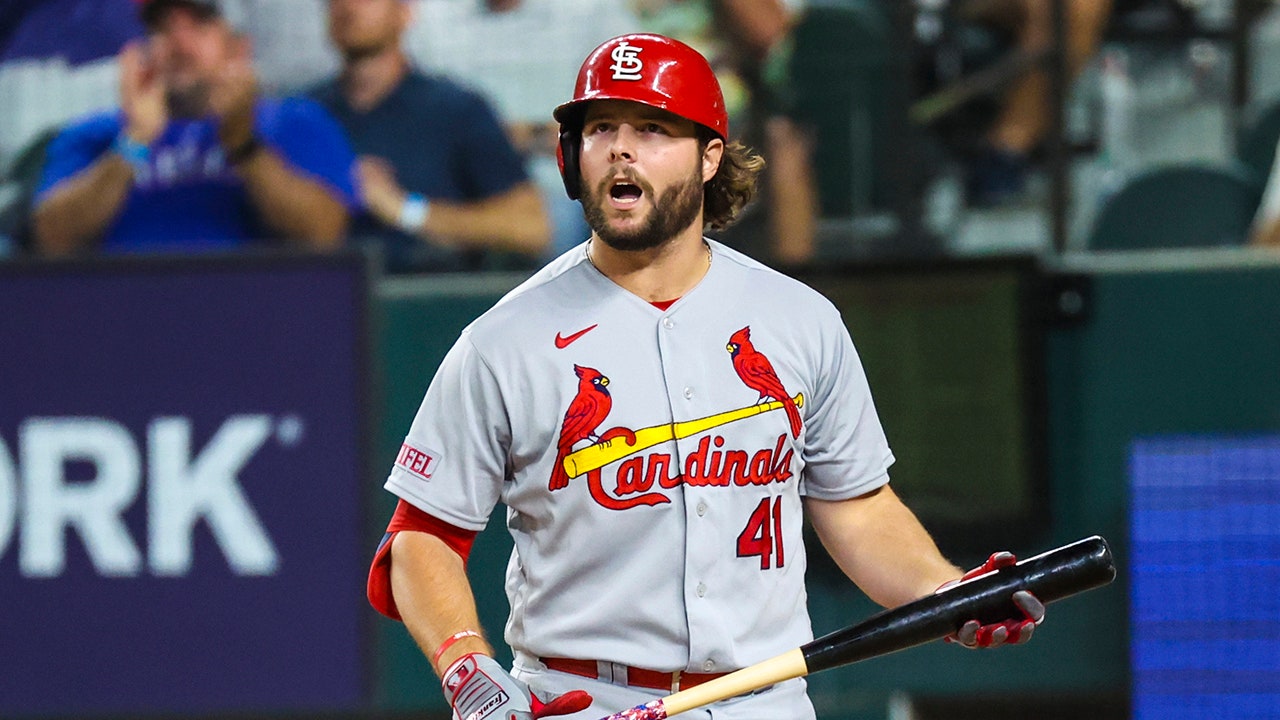
Ryan Fernandez
As noted in the introduction, the Cardinals’ bullpen deserves a fair share of the blame for the team’s late-game collapses. Over the first 25 games, the relievers have combined for a disappointing 2-8 record and a 4.94 ERA. Excluding the reliable trio of Maton, Helsley, and Leahy, the rest of the bullpen has posted a dismal 2-7 mark with a staggering 6.67 ERA. A significant contributor to these struggles is Ryan Fernandez, who currently holds an 0-2 record with an alarming 11.42 ERA in 2025.
Fernandez, a Rule 5 draft pick last year, was a valuable asset in the bullpen, finishing the season with a 3.51 ERA and 71 strikeouts over 66.2 innings. His solid performance and underlying metrics pointed to long-term potential, leading many—including myself—to believe he could eventually take over Andrew Kittredge’s late-inning role. This seemed to align with the Cardinals’ thinking, although Fernandez had a shaky Spring Training. Despite some command issues during his 8.2 exhibition innings, his strikeout rate remained promising, and the poor results were largely brushed off as typical of spring stats.
He opened the regular season with a scoreless outing but then surrendered at least one run in each of his next four appearances, including two games where he allowed three runs. Fernandez appeared to turn a corner with three straight clean outings—without issuing a walk—but quickly regressed, giving up five earned runs over just 1.2 innings. The bullpen’s overuse and lack of dependable alternatives forced manager Oliver Marmol to turn to Fernandez in tight spots, but the results were disastrous. The low point came in New York, where Fernandez was tasked with holding a one-run deficit and gave up three runs on three hits and a walk in a single inning.
He received one more opportunity to keep a game tied in Atlanta but gave up a crushing three-run homer to Eli White on a poorly located slider. Once a standout pitch, Fernandez’s slider has drastically regressed and is now rated among the worst in baseball. Opponents are batting .500 against it this season, with two doubles, two triples, and a home run—good for a .950 slugging percentage. That’s a stark contrast to last year, when hitters managed just a .192 average and a .295 slugging percentage off the same pitch.
A demotion to Triple-A could help Fernandez rediscover his slider and rebuild confidence, but his replacement doesn’t offer much beyond a fresh face. Manager Marmol noted that the front office failed to provide quality depth throughout the organization, limiting the team’s options. Riley O’Brien has been called up following Fernandez’s demotion after a solid start to the season and will likely be eased into lower-leverage situations as the Cardinals assess whether his promising stuff can translate at the big-league level.
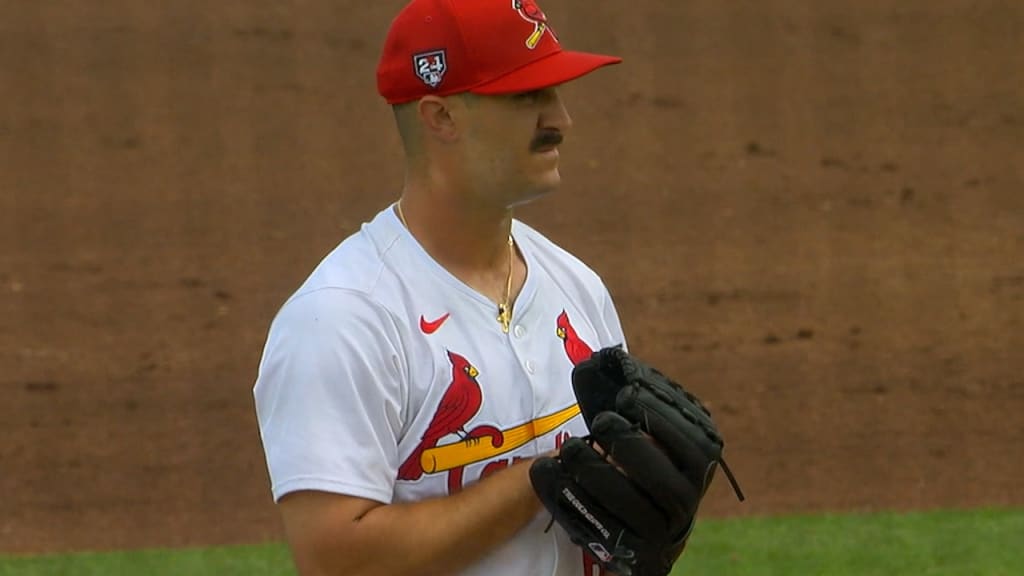
JoJo Romero
As noted with Ryan Fernandez, the Cardinals’ bullpen has been a consistent weakness this season, so it’s no surprise to see another reliever on this list. JoJo Romero, who was their top left-handed option last year, has struggled nearly as much as Fernandez. However, Romero’s decline was somewhat more expected.
Romero had a career-best season in 2024, averaging 94 mph on his sinker, pitching a personal-high 59 innings, and posting the lowest walk rate of his career. But there were red flags—his strikeout rate was a career low, and he benefitted from unusually good luck on balls in play, with an expected ERA nearly two runs higher than his actual 3.36. I highlighted these concerns earlier in the offseason, but with the front office offering little bullpen reinforcement, manager Oli Marmol had little choice but to continue using Romero in high-leverage situations, especially after Liberatore transitioned to the rotation full-time.
Despite a scoreless Spring Training, Romero’s luck quickly ran out once the regular season began. After a solid debut outing, he struggled in three of his next five appearances, giving up two runs each time without recording a strikeout. Though he bounced back with three straight scoreless games, his control issues persisted—he walked three batters over 2.1 innings. Compounding his problems, Romero’s fastball velocity has dropped by 1.2 mph compared to last year, and opponents are hitting .333 against it. His slider has also lost effectiveness.
Romero’s control problems eventually led to more damaging results. Over his next three appearances, he gave up four runs on four hits—including a homer—plus one walk in just 1.1 innings, causing his ERA to spike to 7.27 through 8.2 innings. Despite these struggles, his bullpen role is relatively secure due to ongoing rotation shifts involving Steven Matz and poor performance from John King in low-leverage roles. The lack of ready left-handed options in Triple-A Memphis, especially with no 40-man roster candidates, leaves the team with few alternatives.
For now, Marmol will likely continue to use Romero but may need to reconsider when to deploy him. Rather than relying on him in crucial late-game matchups, the Cardinals might be better off using Romero in less critical middle-inning spots until he can regain his form.