The Cubs have long debated—internally and externally—how best to handle the development of top catching prospect Moisés Ballesteros. Because catching requires so many defensive reps, his bat has advanced faster than his glove, raising an important question: how do the Cubs balance his immediate offensive value with his need for defensive refinement?
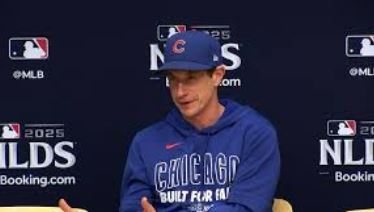
At the winter meetings, manager Craig Counsell made his view unmistakable.
“He’s reached the point where, if he can help the big-league team, he’ll be in the big leagues,” Counsell said. “There isn’t an everyday catching job available for him right now, but with how our roster is currently built, we have room for his at-bats. So I’d prioritize the major leagues.”

He added that upcoming roster moves could impact that stance. Still, it’s clear the Cubs—who are focused heavily on pitching upgrades this offseason—are comfortable relying on Ballesteros and outfield prospect Owen Caissie to help offset the loss of free agent Kyle Tucker.
“Moises basically gave us Tucker’s offensive production in September,” Counsell said. “Between him and Owen, who unfortunately missed most of the month with an injury, those two are key players for us. There’s not much more to consider.”
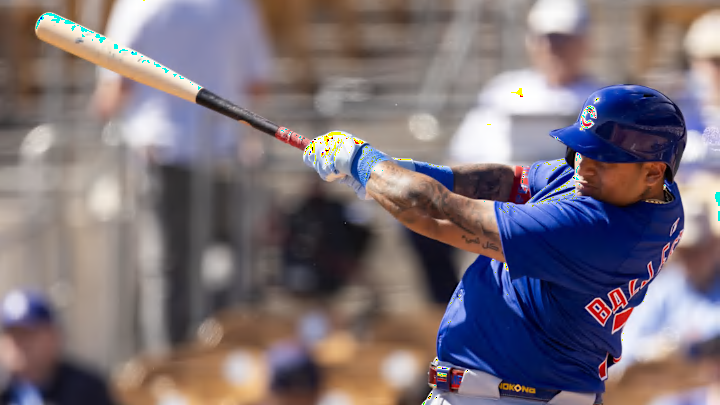
With Tucker out most of September due to a calf strain, the Cubs got a preview of life without him. Ballesteros, used mostly as the designated hitter with Seiya Suzuki in right field, put up a .999 OPS over 14 games in mid-to-late September. Caissie was expected to be part of the September mix as well, but he suffered a concussion in his first game back after an August call-up, ending his season.
The ideal Cubs lineup still would have included a healthy Tucker near the top of the order. But both Ballesteros and Caissie enter 2026 with significant upside.
“You have to give your young players chances,” Counsell said. “It makes your team better. They’re the ones who improve over the season, turn into better players, and ultimately become important core pieces. You need patience, and you need to create those opportunities.”
Even so, Chicago’s offense is expected to take a step back without Tucker. Their hope is that improved pitching will help offset that loss.
Despite Ballesteros (22) and Caissie (23) being in line for meaningful roles, both may still see time at Triple-A. The Cubs followed a similar approach with third baseman Matt Shaw last year—keeping him in the majors as their everyday answer until concerns about his swing mechanics prompted a temporary demotion to Triple-A for adjustments.
The Cubs also avoid leaving their top prospects stuck in bench roles; if a young player isn’t getting regular at-bats in the majors, they prefer he plays daily in Iowa.
Another organizational priority is upgrading the bench—not only to cover injuries but to help prevent them.
“I don’t think guys should play 162 games anymore,” team president Jed Hoyer said. “Giving players occasional days off helps prevent injuries and gives them mental breaks.”
While the Cubs don’t have many platoons and their everyday players pride themselves on durability, Hoyer emphasized wanting to give Counsell the roster depth needed to manage workloads without sacrificing performance.
“When the drop-off from a starter to a bench player is big, you talk yourself into playing the starter too often,” Hoyer said. “When that drop-off is smaller, you can rest guys more. Last year, I think we pushed some players too much.”