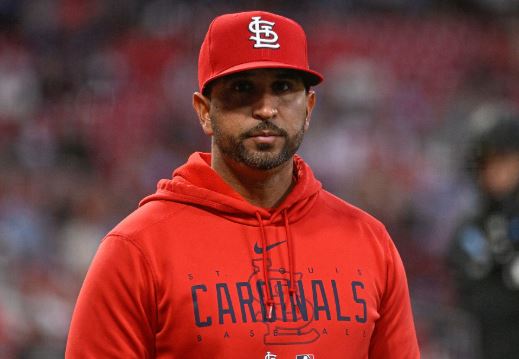
The St. Louis Cardinals have experienced a turbulent year. Last season, they opted to be aggressive at the trade deadline, participating in a three-team deal that sent Tommy Edman to the Los Angeles Dodgers and brought Erick Fedde to St. Louis, among other components. In hindsight, that trade appears to have backfired for the Cardinals.
During the offseason, the team allowed several veteran players to leave via free agency and made just one notable signing, signaling a potential rebuild. However, the roster surprised many by starting the season strong, sparking a wave of conflicting speculation—would St. Louis act as buyers again, look to sell, or take a more neutral stance?
Now, following a disappointing stretch of losses, the Cardinals appear likely to become sellers at the upcoming trade deadline—unless they manage to reverse course once again. The key question is: which players will St. Louis look to move, and who might no longer be part of the roster by the end of July?
RHP Erick Fedde
The Cardinals should look to trade right-hander Erick Fedde at the deadline—regardless of whether they’re in buying or selling mode—and there are clear reasons why.
First, Fedde is likely due for some regression. He’s been aided significantly by the Cardinals’ elite defense, which ranks near the top of the league in many key metrics. While not perfect, his expected ERA (xERA) is noticeably higher than his actual ERA, suggesting he’s been fortunate with how balls in play have fallen so far.
Second, Fedde is on a one-year deal and will hit free agency after the season. That makes him a valuable short-term asset, and the Cardinals should capitalize by getting something in return now rather than losing him for nothing later.
Additionally, top pitching prospects like Michael McGreevy, Tink Hence, and Quinn Mathews are all nearing MLB readiness and could step into the rotation as early as next year. Trading Fedde would not only create an opportunity for these young arms but also help shape the team’s future rotation.
With all this in mind, it would make sense for St. Louis to be proactive in moving Fedde at the deadline. Doing so could pay off down the road.
RHP Phil Maton
The Cardinals made just one signing in free agency, bringing in reliever Phil Maton. Motivated to prove the teams that passed on him wrong, Maton has done exactly that so far.
Through 27 1/3 innings, Maton has been outstanding, posting a 1.98 ERA—the lowest on the team among pitchers with at least 10 innings pitched. He also owns a sharp 2.15 FIP and a 1.13 WHIP, consistently generating weak contact and recording outs efficiently.
If the Cardinals decide to sell at the deadline, Maton should be one of the first players moved. He’s on a one-year deal and is at peak trade value right now. Having signed him for a bargain, St. Louis could turn that low-risk deal into a solid return by flipping him for one or two prospects. From a front office perspective, this feels like a no-brainer move in the weeks ahead.
RHP Ryan Helsley
Few players on the Cardinals’ roster carry as much trade value as closer Ryan Helsley. With his contract set to expire and a return to St. Louis in free agency looking unlikely, dealing him at the deadline should be an easy decision—regardless of whether the team is buying or selling.
Relievers were among the most coveted assets at last year’s trade deadline. Miami’s Tanner Scott, one of the top bullpen arms available, was traded to the Padres in a deal that significantly bolstered the Marlins’ farm system. While Scott had a strong season, Helsley is just as talented—if not more.
This year, Helsley is expected to be the premier reliever available on the trade market. The Cardinals need to maximize that value by securing a strong return in prospects. While St. Louis has internal options who could step into the closer role, that shouldn’t be a major concern right now. If necessary, they can always pursue a replacement in free agency next offseason. The focus should be on capitalizing on Helsley’s trade value while it’s at its peak.
INF Nolan Gorman
The first three players mentioned were straightforward trade candidates—veteran pitchers on expiring contracts who are unlikely to return to St. Louis after the season. Their contract status alone makes them logical assets to move. But the final name on this list is a bit different: 25-year-old Nolan Gorman, who is under team control through 2029 and hasn’t even reached arbitration yet.
Still, Gorman makes a lot of sense as a trade chip right now.
Over his career, Gorman has posted 3.4 WAR and has consistently shown flashes of high-level talent. He’s a capable defender, has a solid bat, and brings positional versatility to the table.
However, Gorman is blocked at his primary position. Brendan Donovan, one of the top young second basemen in the league, has entrenched himself in that role for the Cardinals. On top of that, elite prospect JJ Wetherholt is knocking on the big-league door, and once he arrives, Donovan could shift to the outfield to make room. That effectively drops Gorman to third on the second base depth chart—and possibly even fourth, with top prospect Thomas Saggese swinging the bat extremely well in the minors.
Given all that, it would be more logical for the Cardinals to trade Gorman to a team in need of infield help—such as the New York Yankees—than to keep him in a crowded and increasingly competitive infield mix.