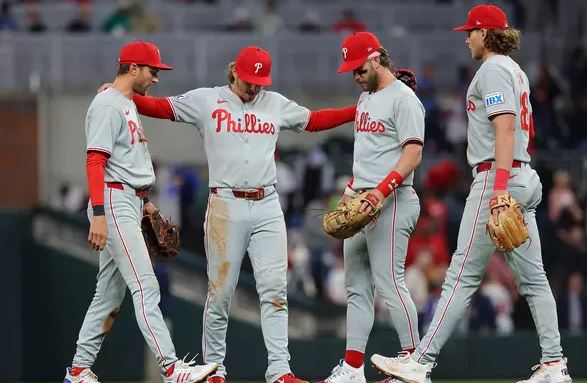
The Philadelphia Phillies just watched their franchise star hook himself up to a machine, send a third of his blood on a field trip, and post it on Instagram like it was a new cleat drop. Now everyone wants to know the same thing:
Did Bryce Harper wander into a blood-doping gray area?
What Harper Actually Did
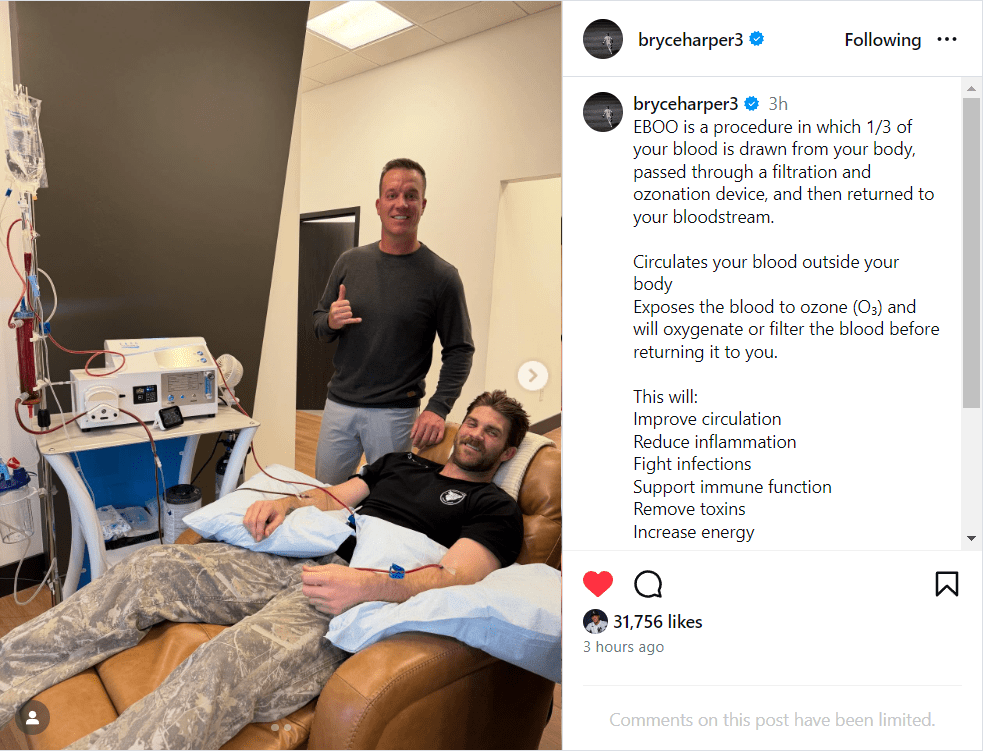
Harper shared a video showing himself lying back in a medical chair while tubes ran from his arm into a machine he identified as EBOO, short for Extracorporeal Blood Oxygenation and Ozonation. In his caption, Harper explained that the device removes roughly one-third of his blood, filters it, exposes it to ozone, and then returns it to his body.
According to Harper, the treatment offers several benefits. He said it improves circulation, reduces inflammation, helps fight infection, strengthens the immune system, removes toxins, and increases energy levels.
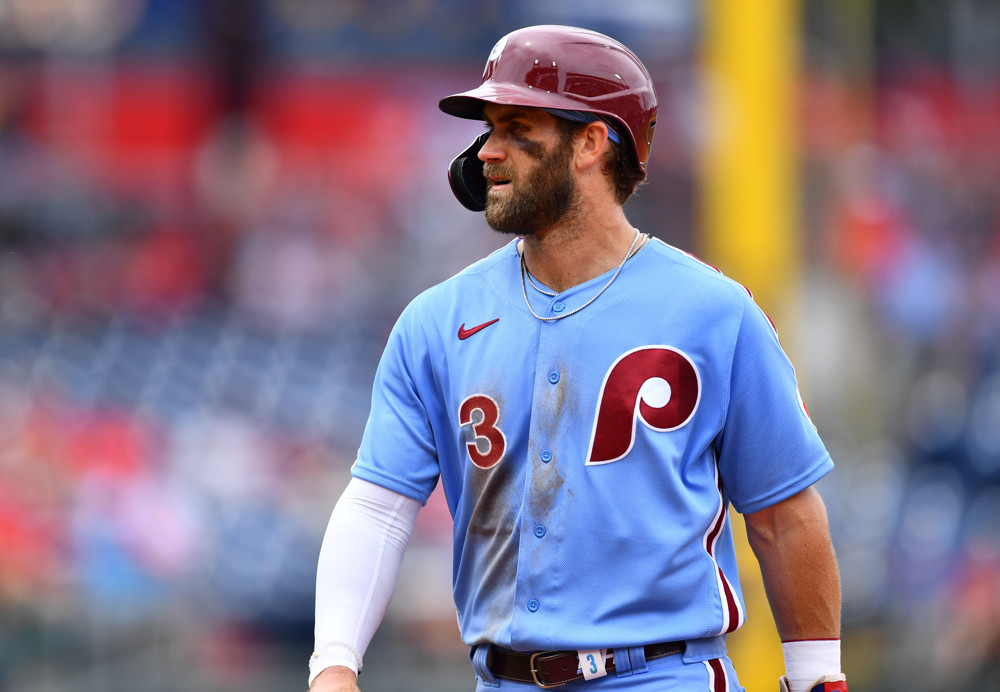
Importantly, Harper did not present the process as a secretive performance enhancer. Instead, he framed it as a legal recovery tool, the kind of high-end wellness treatment elite athletes sometimes use to speed up recovery.
Still, EBOO operates in a controversial medical space. It falls under the umbrella of ozone therapy, which involves exposing the body to ozone gas. The U.S. Food and Drug Administration does not approve ozone therapy for any medical purpose and has warned that it “may do more harm than good.”
Medical literature has linked intravenous ozone treatments to serious complications. In some reported cases, patients experienced severe neurological problems, including ischemic strokes and lasting cognitive damage.
In other words, Harper was not tapping into widely accepted, peer-reviewed medicine. He was stepping into a field many regulators and doctors consider unproven and potentially dangerous.
Is This Blood Doping?
Traditional blood doping is relatively easy to define. Anti-doping authorities describe it as any method that artificially boosts the blood’s ability to carry oxygen. Athletes historically do this by reinfusing stored blood or using drugs such as EPO, which increases red blood cell production. The World Anti-Doping Agency bans all blood-doping techniques at all times.
WADA’s Prohibited List goes even further, outlawing any method that “artificially enhances the uptake, transport or delivery of oxygen.” It specifically targets procedures where blood is removed from the body, altered, and then reintroduced. That category includes ozone-based and ultraviolet-light blood treatments.
That language appears to line up closely with EBOO. The process involves blood leaving the body, being exposed to ozone and filtration, and returning to circulation. The way EBOO is marketed often focuses on improved circulation and increased energy, concepts commonly associated with traditional performance enhancement.
Technically, EBOO does not fit the classic model of blood doping because it does not involve storing blood for later use. Even BroBible’s breakdown noted that the treatment does not match standard blood-doping practices, while also emphasizing that many medical professionals question both its effectiveness and safety.
Still, EBOO resembles other manipulation techniques that are banned across much of the anti-doping world, placing it firmly in an ethical gray area.
Where Does MLB Draw the Line?
Major League Baseball’s Joint Drug Prevention and Treatment Program prohibits substances and methods that provide an “unfair competitive advantage.” The league has consistently emphasized its stance against performance-enhancing manipulation.
However, MLB’s rules do not specifically reference EBOO or ozone therapy. There has been no public indication that Harper violated league policy, nor has there been any report of a failed drug test tied to the procedure.
Like most professional leagues, MLB typically relies on clearly defined banned lists, testing results, and documented violations before stepping in. EBOO sits awkwardly between alternative medicine, experimental biohacking, and methods that look uncomfortably similar to restricted blood manipulation.
Three points stand out clearly:
Medically, EBOO remains unapproved, unproven, and carries documented risks.
Under WADA-style standards, ozone-based blood manipulation would likely qualify as a banned method.
Within MLB, there is no public evidence that Harper broke any rule.
So is Bryce Harper cheating? At the moment, the situation reads less like a rules violation and more like a regulatory blind spot—and a public relations problem. If Harper returns with an MVP-caliber season for a Phillies club that won 96 games last year, critics will draw conclusions regardless of MLB’s official stance.
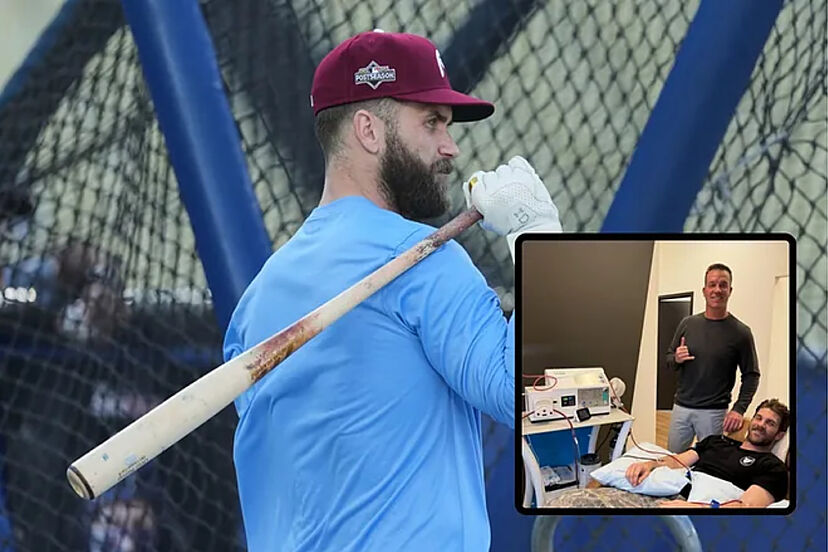
Until MLB or the MLBPA directly addresses EBOO, Harper’s offseason experiment will remain in the same category as many modern recovery trends: not clearly illegal, not clearly effective, and guaranteed to spark debate over where recovery ends and doping begins.