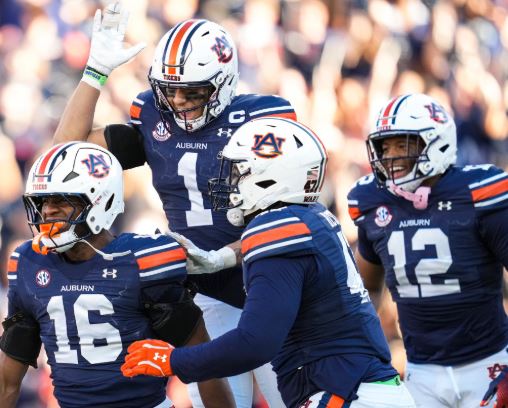
Auburn football is entering yet another offseason filled with questions, transitions, and a roster that continues to reshuffle itself as the transfer portal cycle heats up nationwide. The Tigers have now seen their second defensive player step away from the program, with freshman defensive lineman Antonio Coleman officially joining cornerback Raion Strader in the portal. And while transfers are now a normal part of the modern college football landscape, Coleman’s departure carries its own intrigue, background, and storyline that make it stand out from a typical roster move.

Coleman’s arrival at Auburn was once viewed as a significant recruiting win. Coming out of Saraland High School in Alabama, he was more than just another in-state addition; he was a player Auburn fans believed could grow into a future cornerstone along the defensive front. Rated as a four-star prospect and the No. 182 overall recruit in the 2024 class, Coleman brought with him an impressive blend of size, strength, and upside. Many saw him as the type of raw but gifted defensive lineman who, with proper development, could eventually blossom into an SEC-caliber disruptor.
Saraland, known for producing high-level football talent, had molded Coleman into a standout at the high school level. Recruiting analysts praised his physical tools and motor, noting his ability to shed blocks, collapse pockets, and hold his own against elite offensive line competition. Auburn’s coaching staff was thrilled to secure him, especially amid competition from other major programs. For the Tigers, adding Coleman was symbolic—they were keeping elite in-state talent home and stacking the defensive trenches for the future.
But Coleman’s time at Auburn never got the chance to take off.
Before he could log a single snap during his freshman season, he found himself sidelined indefinitely. In August, just as fall camp ramped up and position battles began to take shape, Coleman was suspended for what the program described as a violation of team rules. The announcement came swiftly, and Auburn made no effort to hide the fact that the suspension was indefinite. Almost immediately, fans and media began speculating about what might have happened behind the scenes.
At the time, former head coach Hugh Freeze was asked about Coleman’s status, but he declined to elaborate, offering no further details and emphasizing that the matter would remain internal. That silence only fueled curiosity, though it was clear Auburn wanted to handle the situation privately. What Freeze did make clear was that Coleman would not be participating in team activities, effectively shutting the door on any chance of early playing time during the 2024 season.
For a young player trying to earn his place in the SEC, the suspension created an uphill battle. Coleman watched from the sidelines as Auburn rotated other young defensive linemen through practice reps and game action. And in a conference as competitive as the SEC, time missed is opportunity lost. Development stalls. Depth charts shift. Coaches lean on the players who are available and reliable. As the season progressed, any path Coleman may have had to making an early impact grew narrower.
His entry into the transfer portal now suggests that both sides—Coleman and the program—are ready to move on. Auburn is in the early stages of retooling its roster under new leadership, and Coleman may be seeking a fresh environment where he can reboot his young career, regain momentum, and carve out a more immediate role.
For Auburn, his departure adds another wrinkle to an offseason already filled with uncertainty. The defensive line remains one of the most important areas to address, and losing a former four-star prospect only increases the pressure on the staff to recruit, develop, and retain talent in the trenches. With Strader also heading out the door, the defense as a whole is undergoing the kind of turnover that requires careful roster management and strategic additions through both high school recruiting and the transfer portal.
Coleman’s story also speaks to the volatility of modern college football. The transfer portal era has introduced newfound freedom for athletes but has also reshaped how programs approach roster building. Freshmen who once may have stayed multiple years to develop are now more willing than ever to search for a better fit if early adversity arises. Suspensions, crowded depth charts, coaching changes, and a host of other factors can influence a young player’s future in ways that were less common a decade ago.
For Coleman, a reset might be exactly what he needs. Despite the rocky start at Auburn, his recruiting profile and raw talent still make him an appealing player for other programs. Defensive linemen with his physical traits are always in demand, and it is likely he will find no shortage of suitors once he begins exploring his next destination. If he can cleanly separate from the setback he faced at Auburn and focus on development, he still has the tools to become a productive college player.
For Auburn, Coleman’s exit is part of a broader narrative: a program in transition. Coaching changes, roster turnover, and the pressure of competing in the SEC all shape what is becoming a pivotal offseason. The Tigers are attempting to rebuild momentum, reset their culture, and find the core group of players who will lead them into the next era of Auburn football. Losing two young defenders early in the cycle is not ideal, but it also provides clarity. The program now has a better sense of which players are committed to the rebuild and which positions need to be reinforced quickly.
In the end, Coleman’s time at Auburn may have been brief and complicated, but his departure underscores the unpredictability of college football today. It is a reminder that talented recruits do not always follow linear paths, that programs can shift suddenly, and that both players and teams often need fresh starts to move forward.
As Coleman begins his next chapter and Auburn continues reshaping its roster, both sides now have a chance to reset and pursue their goals with renewed direction. The Tigers will look to replenish their defensive depth, and Coleman will search for a place where he can restart his promising career.
The story is still developing, but one thing is clear: in the ever changing world of college football, every departure is also an opening—for the player, for the team, and for what comes next.