
By nearly every metric, the San Diego Padres are enjoying the most successful stretch in franchise history. The team has reached the postseason four times in the last six seasons after making the playoffs just five times across its first 51 years. While the addition of a third wild card spot has helped, San Diego was rarely close to contention for much of its past. Three of the six best regular-season winning percentages in franchise history have come during the last six years, with four of the top eight recorded in the past eight seasons.
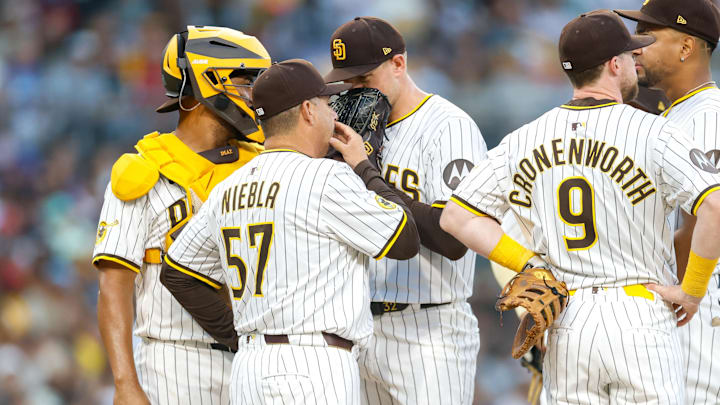
That success on the field has reignited a fan base that has celebrated two National League pennants, in 1984 and 1998, but is still waiting for its first World Series title. Attendance numbers reflect that renewed enthusiasm, with five of the best crowds in team history coming recently:

2025: 3,437,201
2024: 3,330,545
2023: 3,271,554
2004: 3,016,752 (Petco Park’s inaugural season)
2022: 2,987,470
Few venues in baseball match the atmosphere of a sold-out Petco Park during a meaningful game. Padres fans are desperate for a championship, a desire shared by late owner Peter Seidler, who dramatically increased spending in pursuit of a title. According to Cot’s Baseball Contracts, payroll sat at $71 million in 2017, climbed to $104 million in 2019, jumped to $184 million by 2021, and reached $257 million in 2023. A franchise that once avoided nine-figure payrolls now routinely spends more than $200 million.

That financial commitment paid off, as the Padres now generate enough revenue to contribute to revenue sharing rather than receive it, underscoring the idea that winning can sustain itself. Seidler passed away at age 63 in November 2023, and his death sparked a bitter family dispute over control of the team. His widow, Sheel, and brothers John and Robert engaged in legal battles for authority over the franchise.
John Seidler has since been recognized by Major League Baseball as the Padres’ control person, and last month the family revealed plans to explore strategic options, effectively signaling an intent to sell. With a potential sale looming, questions about payroll have intensified. At the Winter Meetings, Seidler indicated spending would remain comparable to 2025.
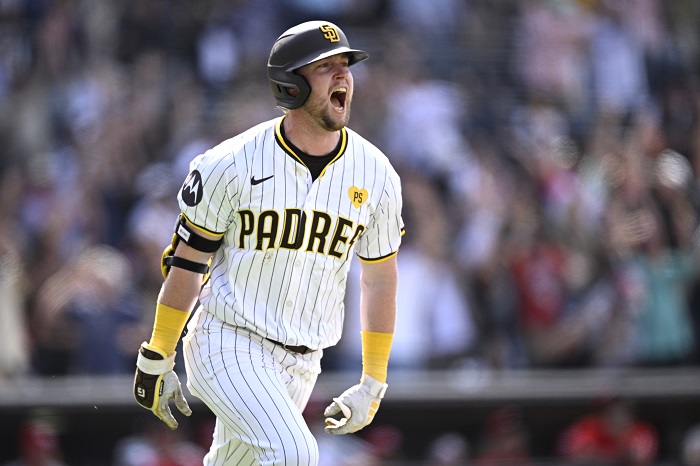
“We anticipate payroll will remain at a similar level to last year,” Seidler told the San Diego Union-Tribune. “We’re operating the club as we have for the last five or six years.”
For competitive balance tax purposes, the Padres finished 2025 with a $280 million payroll and an actual payroll of $221 million. A roughly $10 million CBT penalty pushes total spending to about $231 million. Looking ahead to 2026, San Diego has approximately $196 million in actual salary committed and about $233 million in CBT payroll, still below the $244 million tax threshold.
If the Padres match last year’s overall spending, general manager A.J. Preller would have around $35 million to work with, though the reality is more complicated. Once the team crosses the CBT threshold, additional spending is taxed at 30 percent, effectively reducing available room to roughly $25 million to $30 million. That may not be enough to address multiple needs, including starting pitching, a first base or DH option, and overall depth.
As a result, several key players have surfaced in trade rumors, including Ramón Laureano, Mason Miller, Jeremiah Estrada, Adrian Morejon, and Nick Pivetta. Preller’s aggressive and unpredictable style means nothing can be ruled out, but signs suggest the Padres are exploring ways to trim payroll while still improving the roster.
That strategy is easier in theory than practice. While the Padres pulled it off in the Juan Soto trade two years ago, deals of that caliber are rare. One seemingly simple option is trading Laureano, whose $6.5 million salary is team-friendly and would attract interest. However, replacing his production would likely cost more than keeping him, making a pure salary dump counterproductive. Laureano offers strong value at his price point, and San Diego would be better served retaining players like him unless a deal brings meaningful talent in return.