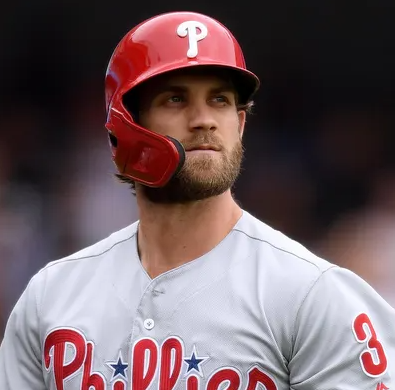
The Philadelphia Phillies walked off the field at the end of the 2025 season carrying more frustration than fulfillment. A year that began with championship aspirations ended in heartbreak, and while the organization is already focused on mounting another serious run in 2026, one comment from the aftermath continues to hover over the franchise.
Shortly after the season concluded, president of baseball operations Dave Dombrowski made a candid evaluation that quickly made headlines. He described Bryce Harper’s 2025 campaign as “not elite.” For most players, that kind of assessment might spark debate. But when it’s directed at the face of the franchise — the player synonymous with the Phillies’ identity — it carries far more weight.

At first, Harper kept his reaction private. But recently, he addressed the situation publicly, and his response made it clear the comment didn’t sit well.
As reported by John Clark of NBC Sports Philadelphia, Harper called the remark “wild” and expressed disappointment that it wasn’t handled internally. He pointed to an understanding that was established when he joined the organization — that matters would stay within the clubhouse and front office walls. From Harper’s perspective, that line was crossed.
He explained that the situation caught him off guard, adding that it “took me for a run a little bit.” While he acknowledged that difficult conversations are part of professional sports, there was a clear undertone of frustration. This wasn’t simply about performance metrics. It was about trust, communication, and how leadership chooses to publicly frame its cornerstone star.
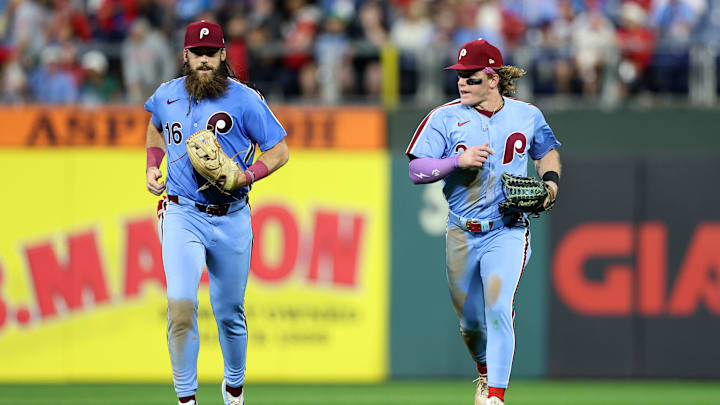
The optics of the comment made the situation even more complicated. Publicly labeling a season as “not elite” is already a bold stance. Doing so about a player who remains one of the most recognizable and productive figures in the sport raises eyebrows. Harper may not have delivered a career-best year, but by most standards, he was still highly productive and central to the team’s success.
It’s one thing to challenge role players or contributors who underperformed. It’s another to publicly critique the player who embodies the franchise. That distinction is what made Dombrowski’s statement so surprising — and what made Harper’s response so pointed.
There was speculation that perhaps the comment was intended as motivation, a subtle push to ignite another MVP-level season in 2026. Harper quickly shut down that narrative as well, making it clear he doesn’t require external motivation to perform at an elite level. “I don’t need to be motivated to be great,” he said — a direct and confident rebuttal that reflects both his competitive edge and his pride.
At its core, this situation highlights the delicate balance between accountability and messaging. Front offices are tasked with setting high standards. Superstars are expected to embrace them. But when evaluations become public soundbites, they can create unintended friction — especially when directed at a franchise pillar.
As the Phillies turn the page toward a new season, the focus will return to wins, losses, and October ambitions. Still, this exchange adds an intriguing subplot. How will Harper respond on the field? How will leadership handle messaging moving forward? And does this moment strengthen the competitive fire within the clubhouse — or create subtle tension beneath the surface?
One thing is certain: when expectations are sky-high and the spotlight never dims, every word matters. And in Philadelphia, words can echo long after the season ends.