
The offseason has brought a wave of uncertainty for Auburn Tigers football, with constant movement across college football forcing programs to rethink how they build and maintain their rosters. Auburn has not been immune to that reality. Questions have surrounded the team’s depth, leadership, and long-term direction after a challenging stretch, and like many programs across the SEC, the Tigers have had to navigate the growing influence of the transfer portal. Every departure or return now carries added significance, especially for a team trying to reestablish itself.
Across the country, players are making decisions that reflect the changing nature of college athletics—some chasing bigger roles, others seeking fresh starts, and many weighing opportunities that go beyond the field. For Auburn, this has created a delicate situation where retaining key contributors can be just as important as bringing in new talent. Stability has become a valuable commodity, and programs that can hold onto players during uncertain times often find themselves in a better position to bounce back. That context is what made this latest development stand out in such a major way.

That’s where Sylvester Smith’s decision becomes impossible to ignore. Rather than entering the transfer portal or testing the waters elsewhere, Smith made it clear he is staying at Auburn and fully committing to the program’s future. His reasoning wasn’t about convenience or timing—it was about belief. He spoke openly about loyalty, about growing up in a small Alabama town, and about choosing to stand firm when things aren’t going right. For Smith, leaving during a difficult stretch didn’t sit well, and he made it known that he wants to be part of the group that turns things around.
The message carried weight because it went beyond a simple announcement. Smith talked about wanting to “leave a legacy” and help push Auburn back in the right direction, a mindset that resonates deeply within a program trying to rebuild its identity. In an era where quick exits are common, his words reflected something different—a commitment to growth, accountability, and finishing what was started. It’s the kind of mentality coaches hope spreads throughout a locker room, especially when a team is searching for consistency and direction.
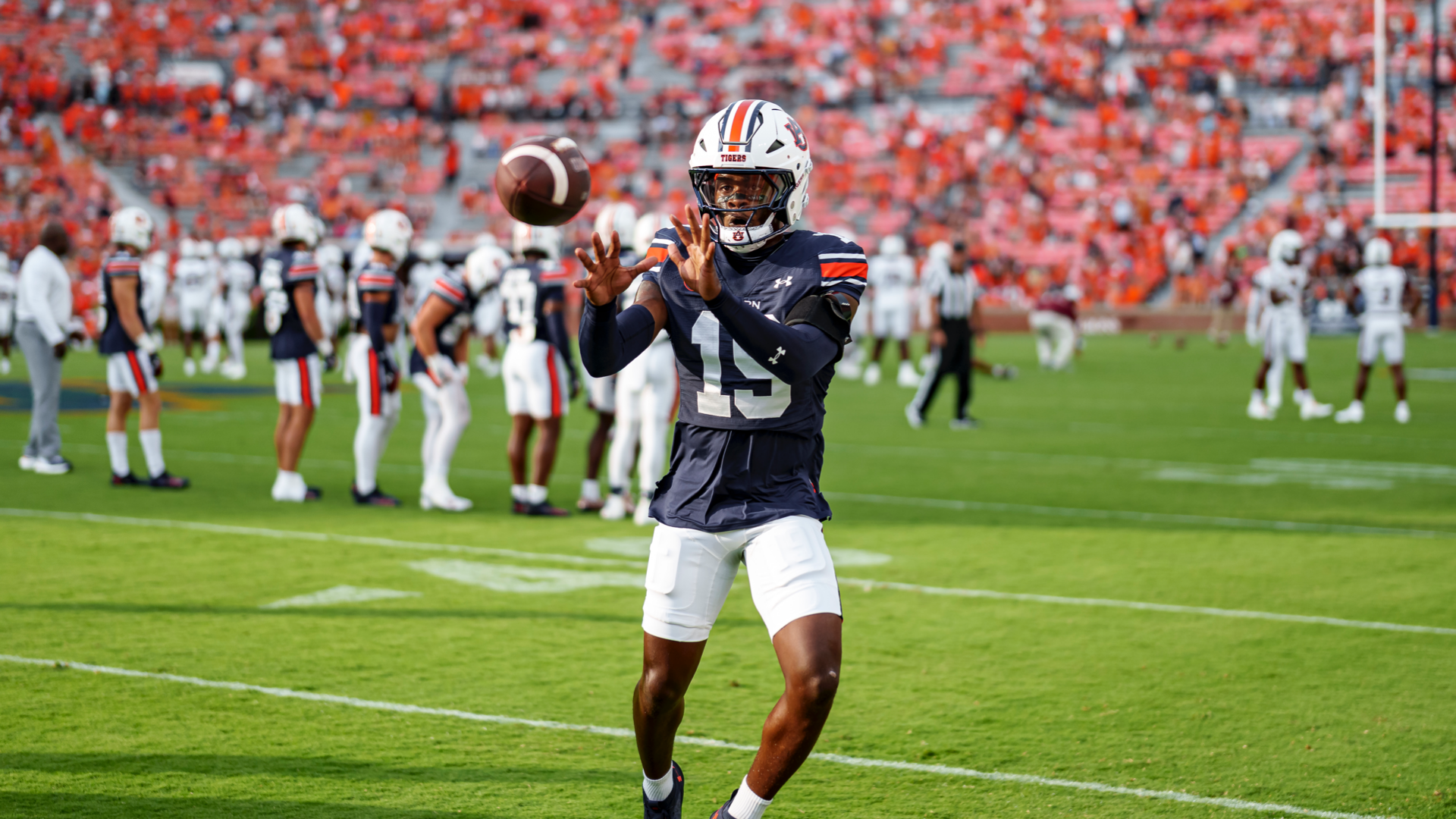
From a football standpoint, Smith’s return could prove just as impactful as any transfer addition. Auburn’s defense has been working to find stability, particularly in the secondary, and keeping a player who understands the system provides an immediate advantage. His experience, physical style of play, and familiarity with the team’s structure give Auburn a reliable piece to build around. Beyond that, his presence adds continuity, something that can be difficult to maintain when rosters change as frequently as they do now.
Leadership, especially during transitional periods, often shows up in moments like this. Smith’s decision sends a clear message not only to fans but to his teammates—that belief in the program still exists from within. That kind of influence can quietly shape a locker room, encouraging others to buy in rather than look elsewhere. It reinforces the idea that progress doesn’t always come from starting over, but sometimes from staying the course and pushing through adversity.

As Auburn continues working through a pivotal offseason, this moment could end up being more important than it initially appears. The Tigers are still expected to pursue talent aggressively and make key additions, but building a strong foundation internally remains just as critical. Smith’s decision doesn’t guarantee immediate success, but it does provide something Auburn needs—confidence, stability, and a sense that the program still has players willing to fight for its future. In a time defined by change, that kind of commitment stands out—and it might just be the spark Auburn needs moving forward.