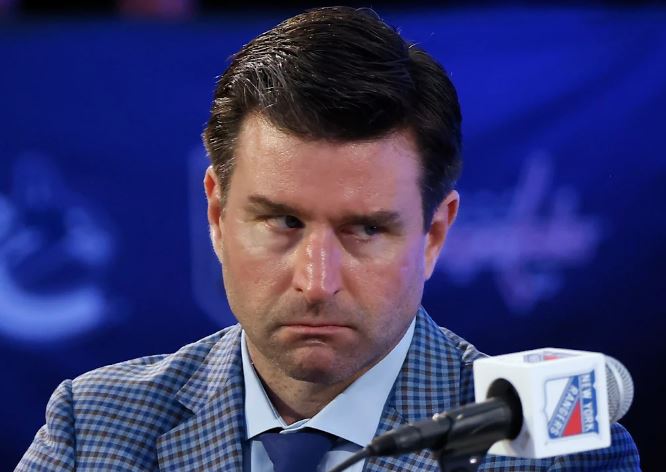
Following the puzzling 2024-25 campaign, many around the league expected the New York Rangers to rebound under new head coach Mike Sullivan and see bounce-back performances from several underachieving players. However, ten games into the new season, the Blueshirts sit at the bottom of the Metropolitan Division — and it feels like déjà vu. The early signs of defensive progress through the first eight games have vanished, as the team once again surrenders a flood of high-danger chances in front of Igor Shesterkin, echoing last year’s struggles. After consecutive losses to two of the league’s worst teams, I took to Twitter to vent my frustration with team president and general manager Chris Drury.

The Pavel Buchnevich Trade
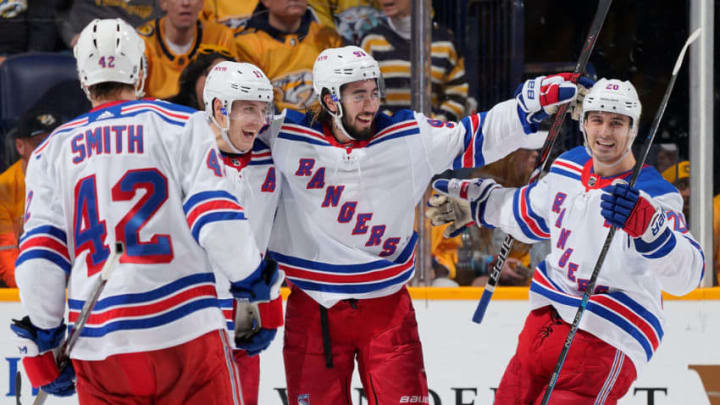
Chris Drury stepped into the general manager role shortly after Jeff Gorton and John Davidson were fired in May 2021. Just two months later, he sent Pavel Buchnevich to the St. Louis Blues in exchange for Sammy Blais and a 2022 second-round pick. At the time, Buchnevich was the Rangers’ fourth-leading scorer and arguably their second-most consistent forward. So when Drury dealt him for what looked like a bargain-bin return, fans were understandably furious. Trading away a 26-year-old, cost-controlled winger immediately raised eyebrows.

In truth, Drury’s decision was driven by two factors: his pursuit of superstar center Jack Eichel and a desire to free up cap space in case that trade materialized. Additionally, the organization believed its young wingers — Alexis Lafrenière, Kaapo Kakko, Vitali Kravtsov, and newly drafted Brennan Othmann — were ready to fill top-six roles. The logic made sense in theory, but it unraveled quickly. Coaching decisions, like playing Barclay Goodrow in the top six while burying Lafrenière and Kakko on the third line, backfired badly. And from a roster-building standpoint, moving a proven young winger for the possibility of adding Eichel was simply poor asset management. Now, in 2025, the Rangers could desperately use a player of Buchnevich’s caliber.
Not Trading for J.T. Miller Earlier
At the 2022 trade deadline, The Athletic’s Arthur Staple reported that the Rangers were heavily interested in reacquiring J.T. Miller from Vancouver. Drury’s plan was to use draft picks — rather than prospects — to add win-now talent. However, Canucks president Jim Rutherford refused to budge unless New York included defenseman Braden Schneider. With neither side willing to compromise, the deal fell through, and Drury pivoted to acquiring Andrew Copp and others instead.
On the surface, protecting a prized prospect from being dealt for a potential rental made sense. But considering the Rangers were in full win-now mode, it’s fair to wonder if holding back was a mistake. The team’s championship window was open, and a player like Miller could have been the difference-maker. Fast-forward to 2025 — the Rangers eventually landed Miller and kept Schneider, but the now 32-year-old captain has struggled to make a major impact. While his 55% expected goal share looks solid on paper, he has only six points through ten games and has often disappeared during stretches of play. It’s fair to ask: did Drury wait too long to bring Miller back, and has New York’s window already started to close?
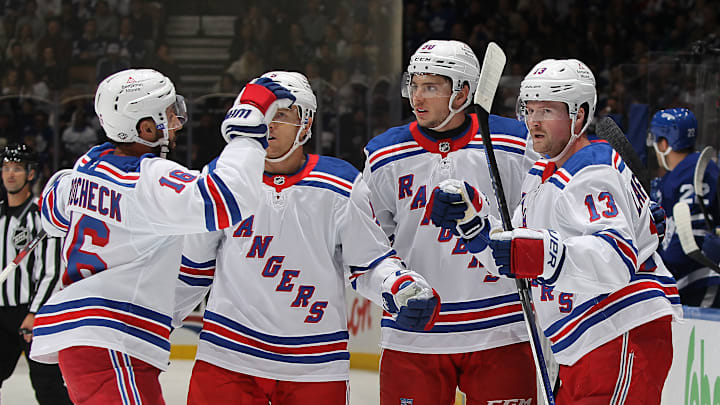
At the 2024 trade deadline, Chris Drury was in the market for a winger to complement Chris Kreider and Mika Zibanejad. The ideal target was clear — Jake Guentzel, an elite scorer known for elevating his play when the postseason arrives. However, Pittsburgh’s asking price was steep: Brennan Othmann, Kaapo Kakko, and a first-round pick. Drury stood firm, unwilling to part with either Othmann or Kakko.

As a result, Guentzel was dealt instead to the division-rival Carolina Hurricanes — the very team the Rangers would later eliminate in their dramatic Game 6 win during the second round. But New York’s momentum ended there, as they were ousted by the eventual Stanley Cup champion Florida Panthers in six games. In hindsight, Drury’s reluctance to pay the price for Guentzel may have cost the Rangers a real shot at the Cup.

Chris Drury recognized that the Rangers’ roster needed a serious overhaul — and to his credit, he wasn’t wrong. The shake-up began with the clever waivers maneuver that allowed the team to move on from Barclay Goodrow’s contract, freeing up cap space to pursue a major addition in free agency. Once again, Drury set his sights on Jake Guentzel, but history repeated itself. Tampa Bay swooped in, acquiring and then re-signing the star winger before New York had a chance. Eventually, Kaapo Kakko was dealt to Seattle for defenseman Will Borgen, who’s been serviceable but hardly a game-changer. Meanwhile, Brennan Othmann’s stagnating development has made him a potential trade candidate as well — a frustrating sign for a once-promising prospect.

Ignoring the Development of Young Talent
When the Rangers selected Alexis Lafrenière first overall in 2020, the future looked bright. With a young core featuring Igor Shesterkin, Adam Fox, K’Andre Miller, Vitali Kravtsov, Filip Chytil, Kaapo Kakko, Braden Schneider, Ryan Lindgren, and Lafrenière, the team appeared poised to dominate for years. Fast forward to 2025, and only Shesterkin, Fox, Schneider, and Lafrenière remain.
It’s a pattern that echoes the missteps of previous regimes. Despite seeing how Jeff Gorton’s mishandling of Lias Andersson played out, Drury retained much of the same developmental staff — including Jed Ortmeyer, Tanner Glass, and skills coach Mark Ciaccio. The results speak for themselves: nearly every first-round pick since 2017, aside from Chytil, has failed to meet expectations. What was once a foundation built for sustained success now feels like a directionless operation. The promise of youth and long-term growth that followed the 2017 “rebuild letter” has all but evaporated, leaving the Rangers’ future as uncertain as it’s been in years.
The Rangers’ current roster carries an average age of 28.08 — a number slightly skewed by the younger players filling out the bottom six rather than the veterans leading the top lines. The core is aging fast: Chris Kreider and Mika Zibanejad are both 32, Vincent Trocheck is 32 as well, and Artemi Panarin, who turns 34 on October 30, is a pending unrestricted free agent. Even Alexis Lafrenière, once viewed as the franchise’s cornerstone, has seen his development stall at just 24 years old.
Looking at the pipeline, the picture isn’t much brighter. Gabe Perreault stands out as the only prospect with legitimate top-six potential — but given the organization’s recent failures in player development, that’s far from a sure thing. With an aging core, few impact prospects, and little sign of progress among their young players, it’s becoming increasingly difficult to find optimism around the Rangers’ future.
Now entering his fifth season at the helm, it’s fair to ask — has Chris Drury’s tenure been entirely negative? Not at all. He’s made several objectively strong moves, including signing Vincent Trocheck in free agency, locking up Adam Fox to a long-term extension, and flipping former 2018 first-rounders K’Andre Miller and Nils Lundkvist for impressive returns. Those are the kind of calculated, forward-thinking decisions that reflect well on a general manager.
But for every strong transaction, there seems to be a puzzling counterbalance. Moves like trading a third-round pick for depth defenseman Carson Soucy raised eyebrows, as did the 2023 trade deadline when Drury went all-in on veterans Vladimir Tarasenko and Patrick Kane — only to see the Rangers bounced in the first round by the Devils and both stars walk in free agency months later. It’s been a tenure defined by highs and lows, with Drury showing flashes of sharp vision, yet too often offsetting them with short-sighted gambles.
It’s now Chris Drury’s fifth full season as the Rangers’ President and General Manager, and the organization still lacks a clear sense of direction. The roster is caught between aging veterans and underdeveloped youth, and the front office appears no closer to building a consistent contender. At this point, it’s hard to argue that a change isn’t necessary — the Rangers need a fresh, modern voice in charge, someone capable of steering the franchise toward a defined, sustainable vision for the future.