
March Madness has always thrived on chaos, controversy, and heartbreak—but what unfolded after North Carolina’s latest gut-wrenching exit crossed a line few expected. This time, the conversation wasn’t just about missed shots or blown leads. It was about whistles, no-calls, and a growing sense that something far bigger than basketball was at play.
When legendary former head coach Roy Williams spoke, the college basketball world stopped to listen.
“This isn’t just a game anymore,” Williams said bluntly, his words carrying the weight of decades spent patrolling the sidelines. And with that, he ignited one of the most heated officiating debates of the 2025 NCAA Tournament.
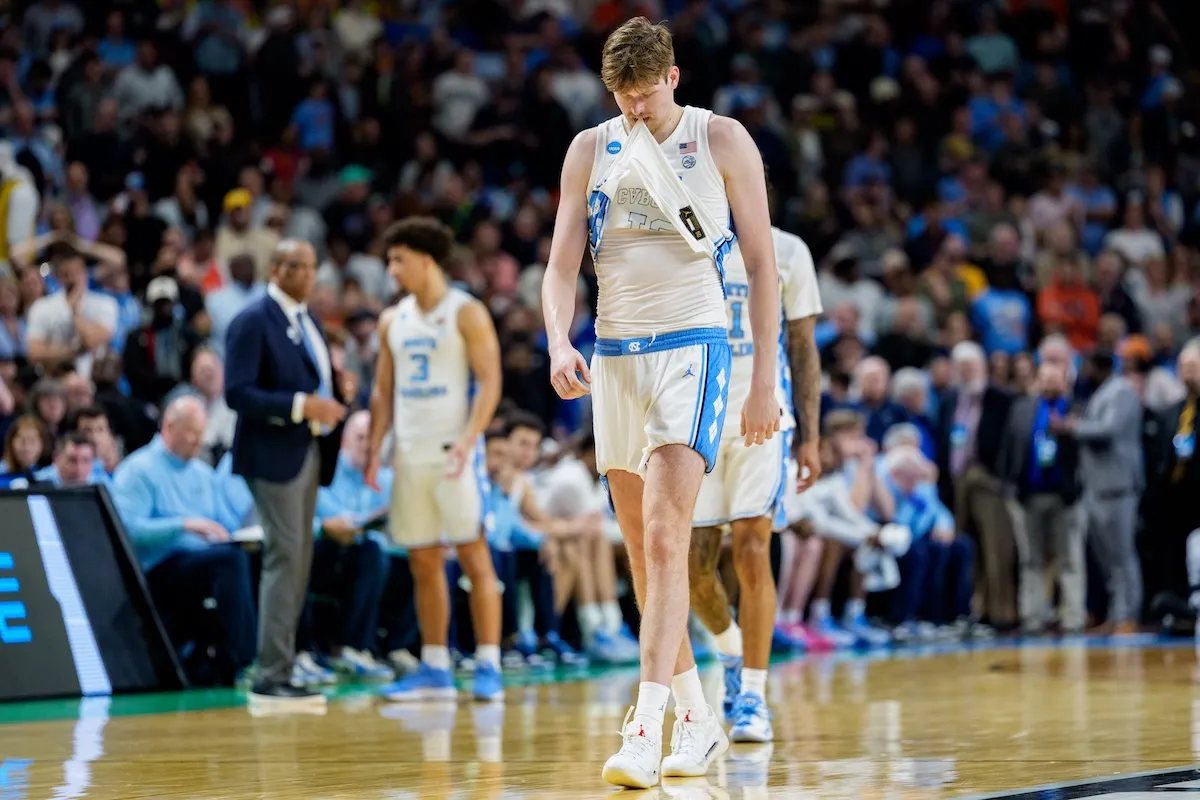
A Game That Slipped Away — And the Calls That Defined It
North Carolina’s loss wasn’t defined by a lack of effort. The Tar Heels fought possession after possession, clawing back from deficits and refusing to fold under pressure. But as the minutes ticked away, frustration mounted—not just among fans, but visibly on the court.
Multiple sequences stood out.
Late in regulation, UNC guards drove aggressively into the lane only to be met with heavy contact and silence from the officials. On the other end, similar contact resulted in immediate whistles against Carolina defenders. The inconsistency was glaring. One possession ended with a Tar Heel sprawled on the floor, no foul called. Seconds later, a ticky-tack reach-in sent the opposing team to the free-throw line.
The foul disparity told part of the story, but the timing told the rest. Key no-calls came in moments when momentum was swinging—moments that define tournament games.

The Missed Moments Fans Can’t Forget
Perhaps the most controversial sequence came in overtime. A UNC forward appeared to be clearly held on a rebound attempt, preventing a potential putback. No whistle. The opponent pushed the ball the other way and scored, turning a one-possession game into a uphill battle.
Then there was the out-of-bounds ruling—initially called in UNC’s favor before a late reversal that stunned players and fans alike. Without a clear camera angle to justify the change, confusion turned to outrage inside the arena and across social media.
For a program built on precision, discipline, and trust in the game’s integrity, those moments cut deep.
Roy Williams’ Words Echo Loudly
Williams, never known as someone who chases headlines, didn’t mince words. He didn’t accuse officials of bias—but he questioned accountability, transparency, and consistency.
When a coach with three national championships and nearly 1,000 career wins speaks this forcefully, it resonates. His message wasn’t just about North Carolina. It was about the sport.
“Players put their hearts into this,” Williams emphasized. “They deserve better.”
A Pattern That’s Fueling National Debate
UNC fans aren’t alone in their frustration. Across this year’s NCAA Tournament, complaints about uneven officiating have surfaced game after game. Coaches have danced around the issue in postgame press conferences. Analysts have pointed to inconsistent interpretations of physicality. Fans have flooded timelines with side-by-side clips asking the same question: How is that not a foul?
What made this moment different was who said it—and how clearly he said it.
More Than a Loss, A Warning
For the North Carolina Tar Heels, the season ended in heartbreak. But Williams’ comments may linger far longer than the final score.
This wasn’t a rant. It was a warning shot from one of the sport’s most respected voices—a reminder that March Madness only works if trust in the game remains intact.
Because when legends start saying “this isn’t just a game anymore,” college basketball has to listen.