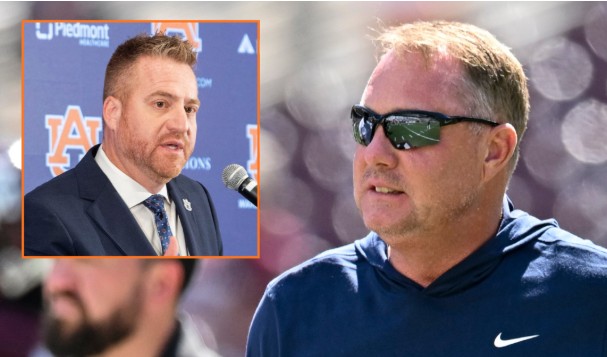
It is fair to criticize Hugh Freeze for many things during his time at Auburn, but one area where he undeniably delivered was recruiting within the state of Alabama.
The Tigers struggled to produce consistent results on the field under Freeze, leading many fans to compare his tenure to that of former coach Bryan Harsin. From a win-loss perspective, the comparison is understandable. Auburn continued to lose games, and at times the program appeared stuck in neutral regardless of who was leading it.
However, Freeze’s impact extended beyond Saturdays. He invested heavily in recruiting, and the effects of those efforts are still visible today. While some of the talent he brought in eventually departed, the quality of players he attracted to Auburn cannot be ignored. His work on the recruiting trail helped elevate the program’s talent level despite the disappointing record.
As new head coach Alex Golesh begins his first season on the Plains, The Athletic’s Grace Raynor and Antonio Morales identified one major challenge ahead of him: matching Freeze’s success in recruiting Alabama’s top prospects. Freeze helped Auburn land standout in-state talents such as Keldric Faulk, Cam Coleman, Malcolm Simmons, Jared Smith, and Demarcus Riddick.

“There are always questions about a coach’s recruiting acumen when he makes the jump from a G6 or non-traditional power to the SEC or Big Ten. Florida’s Jon Sumrall has put together a resounding response to those questions right now, which we will get to in a bit. So has Golesh at Auburn,” Raynor and Morales wrote.
“An interesting angle to look for is whether he can make more headway in the state. There are 20 blue-chip prospects in Alabama, but Auburn has commitments from just two of them. … Hugh Freeze had his faults, but he cleaned up in-state during his last full recruiting cycle on the job (2025), when he signed nine of the top 15 players from the state. We’ll keep an eye on how Golesh progresses there.”
Alex Golesh Must Focus on Retaining Talent, Not Just Recruiting It
While Freeze excelled at bringing talent into the program, Auburn’s biggest issue was keeping that talent and turning it into on-field success.
Despite his reputation as an offensive coach from his days at Ole Miss, Freeze struggled to consistently produce winning results in the SEC. The Tigers’ offense often failed to meet expectations, particularly last season when Auburn ranked outside the top 75 nationally in points per game and also failed to crack the top 75 in total offense.
The instability within the program also contributed to player departures. Talented recruits frequently looked elsewhere after arriving on campus, limiting Auburn’s ability to fully capitalize on its recruiting wins.
That is where Golesh faces his biggest challenge. Landing elite in-state prospects is important, but developing and retaining them is just as critical. Auburn cannot afford to bring in players with star potential only to see them leave before reaching their peak.

Roster turnover is now a reality across the SEC, especially in the transfer portal era. Programs will continue to recruit players away from rivals whenever opportunities arise. Still, Golesh has a chance to establish a culture that encourages players to stay, develop, and build long-term success at Auburn.
Whether he can accomplish that remains to be seen, but early signs suggest he possesses many of the qualities necessary to break that cycle and strengthen the Tigers’ future.