The 2026 EYBL circuit is already in motion, and as prospects from the 2026 class gear up to begin their college journeys, standout moments from last year’s sessions are making the rounds again on social media. Among those clips is Maximo Adams’ dominant showing for Vegas Elite, where he erupted for 38 points and 17 rebounds in a matchup against five-star talent Jordan Smith Jr. last May. Performances like that are a reminder of the kind of impact Adams can bring, even as attention elsewhere has shifted.
Amid the noise surrounding Dylan Mingo’s de-commitment and the ongoing transfer portal movement, Adams’ importance to North Carolina has been somewhat overlooked. He remained committed through the coaching change from Hubert Davis to Michael Malone, and that continuity could prove valuable. At 6-foot-7, Adams profiles as a score-first wing who aligns naturally with Malone’s preferred system. Still, many early projections for UNC’s 2026–27 season have downplayed his potential role.
As things stand, Adams may begin his college career coming off the bench, but that doesn’t diminish his value. In fact, it may suit him perfectly. With Malone still exploring international options, the addition of Sayon Keita appears to have solidified the likely starting lineup: Terrence Brown and Matt Able in the backcourt, Neoklis Avdalas on the wing, Jarin Stevenson at power forward, and Keita anchoring the middle. Within that structure, Adams can thrive as an offensive sparkplug, providing instant scoring and shot creation against second units.
There are still questions surrounding this roster. UNC may struggle against more physical opponents, and depth behind Brown in the backcourt remains uncertain. However, Malone’s blueprint is becoming clear. He’s assembling a group built on length, versatility, and playmaking, with an emphasis on players who can handle the ball and generate offense from multiple positions. The idea is to create mismatches across the floor, allowing for fluid play in both transition and half-court sets.
Adams fits seamlessly into that identity. While he may not rely on elite athleticism, he compensates with smart movement and skill. His long strides help him attack the rim effectively, his footwork allows him to operate comfortably in the post, and his ball-handling enables him to get to his spots, particularly in the mid-range. Add in his shooting touch, and he becomes a flexible offensive piece who can contribute in a variety of lineups.

That versatility could open the door for creative rotations, including larger lineups where every player stands at least 6-foot-6. In those scenarios, Avdalas could function as a point forward, with Adams adding another layer of scoring and spacing. It’s a look that could give UNC a unique edge, even if it comes with growing pains.
While Brown, Avdalas, and Able were solid additions via the transfer portal, the Tar Heels didn’t land a headline-grabbing name like Juke Harris. Combined with Mingo’s departure—which ultimately made sense given injury concerns—expectations around the program have cooled. Some early rankings have even left UNC out of the preseason Top 25 entirely.
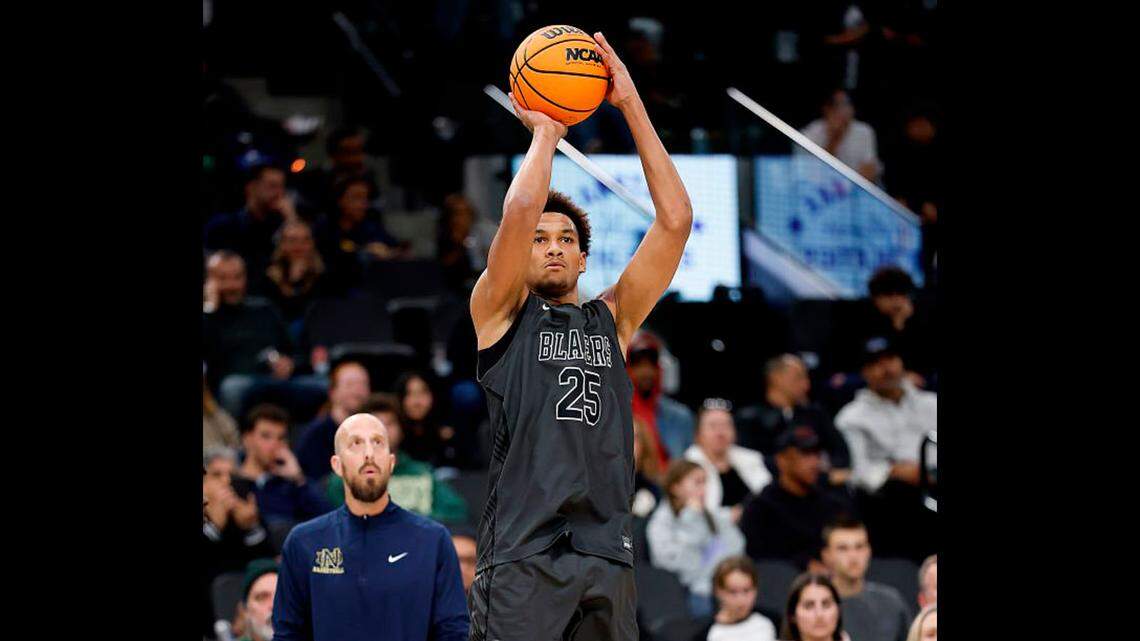
Even so, dismissing Adams’ potential impact might be premature. If he embraces his role and produces as a consistent scoring option off the bench, he could become one of the more important pieces on the roster. That alone may not push UNC into immediate Final Four contention, but it could significantly raise their ceiling within the ACC.