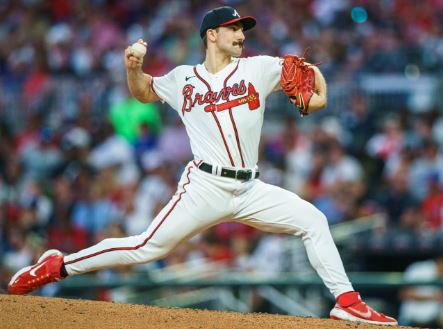
The Atlanta Braves entered the 2026 campaign believing they still had one of baseball’s most intimidating rotations. With Spencer Strider expected to anchor the staff after battling through previous injury setbacks, the club hoped its flamethrowing ace would once again provide the dominant performances that made him one of Major League Baseball’s premier strikeout artists. Instead, Atlanta now finds itself facing another heartbreaking blow.
According to reports, Strider appears unlikely to pitch again during the 2026 season after suffering another setback in his recovery from an elbow injury. The latest update marks a crushing development for both the Braves and their fan base, who had been waiting for the right-hander’s return as Atlanta attempted to stay in the National League postseason race.
For a franchise that has built its identity around elite pitching, losing Strider once again changes everything.
Atlanta has already endured a season filled with adversity, but the absence of its most electric starter leaves an enormous void that simply cannot be replicated. Few pitchers in baseball possess Strider’s overwhelming combination of velocity and swing-and-miss stuff. His upper-90s fastball routinely touches triple digits, while his devastating slider has embarrassed hitters across both leagues.
When healthy, Strider has been one of baseball’s most dominant strikeout pitchers. During his breakout seasons, he consistently ranked among the league leaders in strikeouts despite throwing fewer innings than many frontline starters. His remarkable strikeout rate transformed nearly every outing into must-watch baseball, as double-digit strikeout performances became almost routine.
His emergence helped establish Atlanta as one of the National League’s most dangerous clubs. Every fifth day, the Braves knew they had an ace capable of shutting down even the league’s most explosive offenses while giving their powerful lineup an excellent opportunity to win.
That reality has disappeared.
Instead of preparing for a late-season return, Atlanta now appears to be planning for life without its ace through the remainder of the season. The timing could not be worse. With playoff positioning becoming increasingly important during the final months of the regular season, every rotation spot carries enormous weight.
Replacing Strider isn’t simply about filling innings.
It’s about replacing one of the most dominant weapons in baseball.
Few starters can consistently generate strikeout totals that completely neutralize opposing offenses. His ability to escape jams without relying on his defense made him unique. One swing-and-miss after another allowed Strider to overpower hitters in the biggest moments, often changing the momentum of games by himself.
His absence also creates added pressure throughout Atlanta’s pitching staff.
Veteran starters now face increased expectations to work deeper into games, while the bullpen could be forced to shoulder a heavier workload over the season’s stretch run. Those additional innings have a way of accumulating quickly, especially for a team hoping to remain competitive deep into September.
The Braves have dealt with injuries before, but losing a true ace presents an entirely different challenge.
Every contender can survive the loss of a role player.
Very few can absorb losing one of baseball’s premier frontline starters without seeing their championship aspirations suffer.
Atlanta’s offense may still possess enough firepower to keep the club competitive on most nights, but postseason baseball has repeatedly shown that elite starting pitching often determines October success. Teams with dominant aces hold a significant advantage in playoff series, where one pitcher can completely alter the trajectory of a matchup.
That is precisely what makes this latest update so devastating.
The Braves were undoubtedly hoping Strider would return in time to strengthen the rotation for a potential postseason push. Instead, the organization must now prepare for the possibility that his next competitive appearance won’t come until 2027.
The news also raises understandable questions about the long-term outlook.
While the organization will undoubtedly prioritize Strider’s health over any short-term timeline, repeated elbow issues always become a major storyline for power pitchers whose success relies on generating elite velocity. Atlanta’s medical staff will almost certainly take every precaution necessary to ensure he returns at full strength rather than rushing him back before he’s completely recovered.
That patience may ultimately benefit both the pitcher and the franchise, even if it comes at the cost of the current season.
Inside the clubhouse, however, the emotional impact is impossible to ignore.
Strider has become one of the Braves’ unquestioned leaders despite his relatively young career. His competitive intensity, fearless mentality, and confidence have made him one of the faces of the organization. Teammates know exactly what he brings every time he steps on the mound—a chance to dominate.
Without him, Atlanta must discover another path.
Young pitchers may receive expanded opportunities, while veterans will be asked to elevate their performances during the season’s most critical stretch. The Braves have consistently demonstrated organizational depth over recent years, but replacing an ace is arguably the most difficult challenge in baseball.
The coming weeks will reveal whether Atlanta has enough talent to overcome yet another major obstacle.
Championship-caliber teams often define themselves by how they respond to adversity, and the Braves now face perhaps their toughest test of the season. If they remain in contention, it will require contributions from every corner of the roster—from the rotation to the bullpen, from the everyday lineup to the bench.
For now, though, the focus remains on Strider.
The latest reports indicate that one of baseball’s most electric pitchers is unlikely to take the mound again this season, leaving Braves fans wondering what might have been. It’s a heartbreaking development for a franchise with championship ambitions and another reminder of how quickly injuries can reshape an entire season.
Atlanta’s postseason hopes are still alive, but the road ahead just became significantly steeper without the flamethrowing ace who has spent the last several years establishing himself as one of the most dominant pitchers in Major League Baseball.