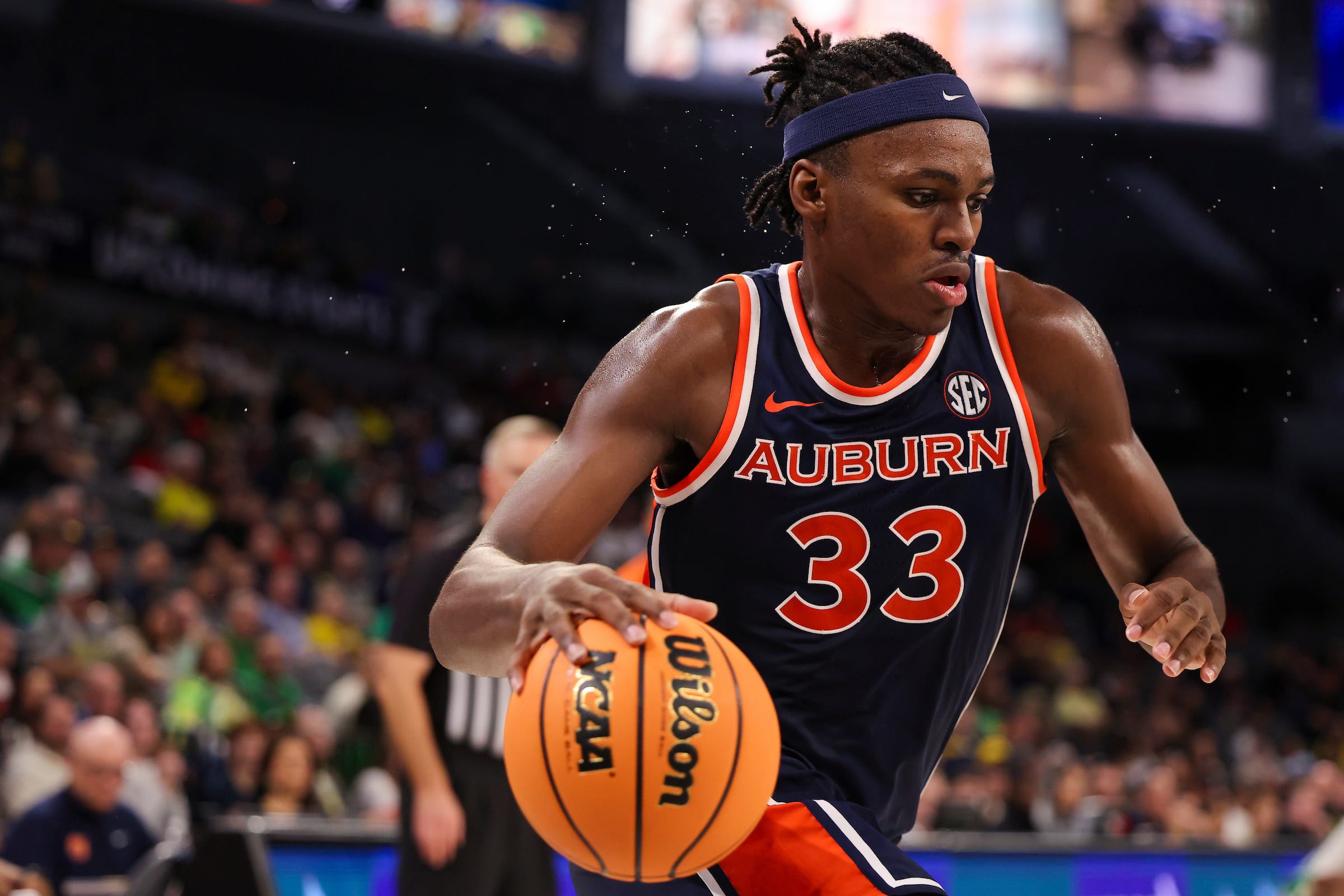
Auburn’s offseason just took another sudden twist, as news broke that a young frontcourt player has decided to enter the transfer portal, catching many around the program off guard. The move comes at a time when teams are trying to stabilize rosters and build chemistry ahead of the next season, making any unexpected departure feel even more disruptive. For Auburn, which has been working to solidify its depth and development pipeline, this is another reminder of how quickly things can change in modern college basketball.
What makes this situation stand out is not just the timing, but the potential impact on the team’s long-term plans. The player in question was seen as one of the developmental pieces who could grow into a larger role over the next few seasons. While not a headline star yet, his size, versatility, and flashes of all-around production gave coaches something to build on. Losing that kind of upside forces the staff to reassess rotation options and possibly look toward the transfer market themselves.
The player has been identified as Sebastian Williams-Adams, the 6’8” freshman who showed promise during limited but encouraging minutes last season. He averaged 7.0 points, 3.5 rebounds, and 1.5 assists, displaying the kind of well-rounded skill set that suggested he was still just scratching the surface of his potential. For a freshman adjusting to the college level, those numbers hinted at a player who could take a real jump with more experience and consistent playing time.

Inside the program, reactions are said to be a mix of surprise and understanding, as roster movement through the portal has become increasingly common across college basketball. Still, losing a young forward with three years of eligibility remaining is not something any coaching staff takes lightly. It opens up questions about depth, player development, and how Auburn will now redistribute minutes in the frontcourt.
From a broader perspective, this move reflects the modern reality of the transfer portal era, where player mobility can reshape a roster overnight. Programs now have to constantly balance recruiting high school talent with retaining young players who might leave if their role doesn’t grow fast enough. For Auburn, this is another moment that tests its ability to adapt quickly and stay competitive in a shifting landscape.

As the offseason continues, attention now turns to how Auburn responds—whether through internal development or new additions from the portal. One departure doesn’t define a season, but it does change the equation. And for a team aiming to compete at a high level, every piece lost or added matters more than ever.