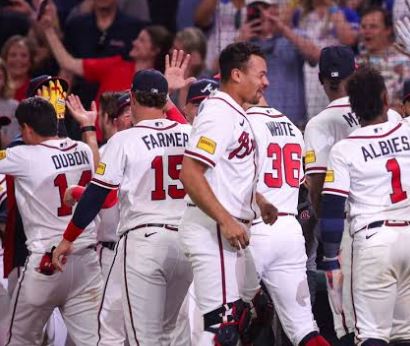
The Atlanta Braves have spent much of the 2026 season proving they remain one of the National League’s most dangerous contenders, but as the MLB trade deadline rapidly approaches, the front office is facing a series of difficult roster decisions. Championship-caliber teams are constantly looking for ways to improve, and Atlanta is expected to be among the league’s most active buyers. Unfortunately, those additions often come at the expense of current roster players, and veteran first baseman has emerged as one of the most likely candidates to lose his spot.
Smith’s journey with the Braves has been one of the most surprising stories of the season. Entering the year with modest expectations after signing a low-risk deal, the former first-round draft pick quickly revitalized his career in Atlanta. He became an important contributor during the first half of the season, delivering timely hits, driving in key runs, and providing much-needed stability for a lineup that battled injuries and inconsistency. His strong performances helped the Braves stay competitive during critical stretches, making him one of the best under-the-radar signings in Major League Baseball.
For several weeks, Smith looked like a player who had rediscovered the form that once made him one of baseball’s promising young hitters. He consistently came through in clutch situations, produced quality at-bats, and supplied offensive depth behind Atlanta’s established stars. His production exceeded expectations, and what initially appeared to be a temporary opportunity evolved into a regular role in the lineup. At one point, few would have imagined his roster spot would later come into question.
However, baseball is a game of adjustments, and Smith’s offensive production has taken a significant downturn over the past several weeks. Since the beginning of June, his numbers have declined sharply, with his batting average, on-base percentage, and slugging percentage all dropping well below the levels that made him so valuable earlier in the year. As opposing pitchers adjusted to his approach, Smith has struggled to generate consistent hard contact, and his offensive impact has steadily diminished.
The timing of that slump could not be worse. Atlanta finds itself firmly in the postseason race and has little room to carry underperforming players as it prepares for another October push. General manager Alex Anthopoulos has earned a reputation for making bold, aggressive moves when he believes they improve the team’s championship chances. With the trade deadline approaching, industry insiders expect the Braves to explore upgrades at multiple positions, including the lineup, bullpen, and starting rotation.
If Atlanta successfully acquires another impact bat before the deadline, the organization will almost certainly have to create room on the active roster. That reality has fueled growing speculation that Smith could be designated for assignment or otherwise removed from the roster despite the valuable contributions he made earlier this season. Such a move would reflect the difficult business side of baseball rather than erase the important role Smith played during the first half of the campaign.
The Braves’ roster has become increasingly crowded as injured players return and several veterans continue providing valuable versatility. Players capable of filling multiple defensive positions while contributing offensively have given manager Walt Weiss numerous lineup options. That flexibility has become one of Atlanta’s greatest strengths, but it also means that roster spots are becoming increasingly difficult to justify for players whose offensive production has cooled.
Atlanta’s front office has never been reluctant to make unpopular decisions if it believes doing so increases the club’s chances of winning a World Series. Anthopoulos has repeatedly demonstrated his willingness to move on from veterans, reshuffle the roster, and aggressively pursue upgrades regardless of previous contributions. That philosophy has helped keep the Braves among baseball’s elite organizations for years, and there is little reason to believe this deadline will be any different.
Adding to the urgency is Atlanta’s position in one of baseball’s most competitive playoff races. Every game carries significant importance, and even marginal roster improvements can make a meaningful difference over the final months of the regular season. With several high-profile players reportedly available on the trade market, the Braves have an opportunity to strengthen an already talented roster before October arrives.
Smith’s overall season should not be overlooked despite his recent struggles. Few players have exceeded expectations the way he did during the opening months of the season. He provided valuable offense when Atlanta desperately needed production, stabilized the lineup through difficult stretches, and became a dependable presence both at first base and as a designated hitter. His resurgence stands as one of the club’s most pleasant surprises of 2026.
Still, contenders are ultimately judged by their ability to maximize every roster spot. If Atlanta believes another player can provide greater offensive consistency or positional value during the postseason race, sentiment will likely take a back seat to performance. That reality places Smith in an increasingly vulnerable position as the trade deadline draws closer.
Whether the Braves ultimately part ways with the veteran or give him additional opportunities to regain his early-season form, the coming weeks promise to be pivotal. Atlanta remains focused on competing for another deep postseason run, and every roster decision will be made with that objective in mind. For Dom Smith, whose remarkable comeback once looked like one of the season’s best stories, the next chapter may ultimately depend on whether the Braves believe his best baseball still lies ahead—or whether their championship ambitions require a different direction.