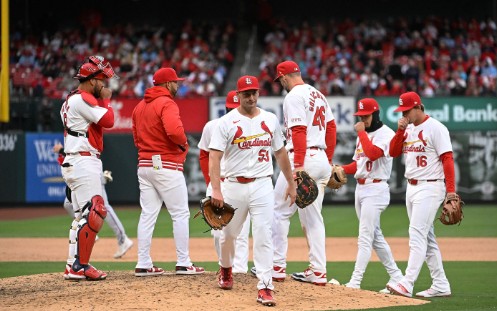
The St. Louis Cardinals have reached one of the most pivotal moments of their rebuilding process, and with the MLB trade deadline fast approaching, the franchise appears willing to make a move that could send shockwaves across the league. While many expected the Cardinals to stand pat or add complementary pieces after exceeding preseason expectations, recent reports indicate the organization is open to discussing one of its most valuable assets—an All-Star catcher.
That revelation underscores the unique position St. Louis finds itself in. The Cardinals are neither full-fledged buyers nor committed sellers. Instead, they are balancing the present with the future, evaluating every opportunity that could accelerate their long-term championship aspirations. With president of baseball operations Chaim Bloom overseeing the organization’s first full rebuilding cycle, every decision made over the next several days could shape the franchise for years to come.
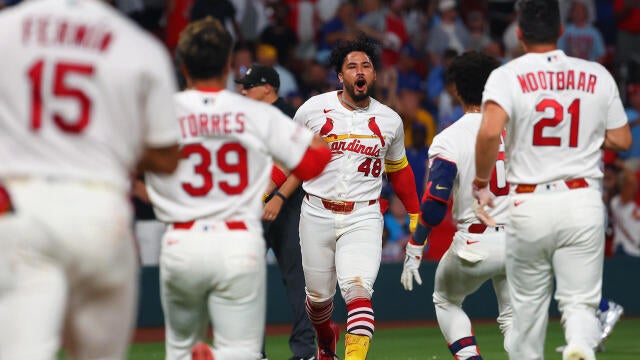
The Cardinals’ willingness to entertain offers is less about giving up on contention and more about capitalizing on one of baseball’s rarest luxuries. Few organizations possess the kind of depth St. Louis has behind the plate, making it one of the few clubs capable of moving an impact catcher without completely weakening its roster.
Iván Herrera has blossomed into one of the biggest breakout stars in the National League this season. The 26-year-old earned his first All-Star selection after establishing himself as one of baseball’s most productive offensive catchers. His combination of power, plate discipline, and consistent hard contact has transformed him into one of the premier players at his position, while his continued defensive improvements have only increased his value around the league.
Behind Herrera, the Cardinals also boast one of the game’s most dependable defensive catchers in Pedro Pagés. Although his offensive numbers don’t match Herrera’s production, Pagés has become a favorite among the pitching staff because of his exceptional game-calling, pitch framing, and leadership behind the plate. His defensive reliability has made him an invaluable contributor, particularly for a rotation filled with young arms still developing at the major league level.
Adding even more flexibility is top prospect Jimmy Crooks, who continues to impress in the minor leagues and is viewed internally as another catcher capable of contributing in St. Louis in the near future. That organizational depth gives Bloom a luxury few executives enjoy—trading from a position of strength rather than necessity.
The Cardinals’ front office understands that quality catchers rarely become available, particularly those under multiple seasons of club control. Around baseball, numerous contenders are searching for upgrades behind the plate as they prepare for postseason runs. Injuries, inconsistent offensive production, and defensive shortcomings have left several playoff hopefuls scrambling for solutions, creating a seller’s market for St. Louis.
An All-Star catcher impacts far more than the lineup. Elite catchers influence every game through pitch framing, game management, defensive communication, and their ability to guide an entire pitching staff. Those intangibles often become even more valuable in October, when every pitch carries enormous significance. That reality significantly raises the asking price for any catcher capable of making an immediate difference.
If the Cardinals ultimately decide to move Herrera, the return would likely rank among the most significant packages exchanged before this year’s trade deadline. Players with his age, production, and years of team control rarely hit the market, meaning St. Louis could reasonably demand multiple elite prospects, young major league contributors, or controllable starting pitching capable of strengthening the organization for years to come.
Even if the Cardinals choose to market Pagés instead, interest is expected to be substantial. Teams searching for defensive stability behind the plate understand the value of a catcher who can expertly handle a pitching staff while providing dependable defense every night. Because St. Louis isn’t under financial pressure or forced into making a move, Bloom has the leverage to wait for an offer that truly reflects the value of his catchers.
The timing of these discussions also reflects the Cardinals’ evolving organizational philosophy. Entering the season, expectations were modest as the club focused on developing its young core. Instead, players like Jordan Walker, JJ Wetherholt, Alec Burleson, and several emerging pitchers helped keep St. Louis firmly in postseason contention throughout much of the first half.
However, an inconsistent stretch after the All-Star break exposed areas that still need improvement. Rather than sacrificing future flexibility in pursuit of a short-term playoff push, the Cardinals appear committed to making disciplined decisions that strengthen the organization beyond 2026. That approach aligns perfectly with Bloom’s patient roster-building strategy, one centered on sustainable success instead of quick fixes.
The franchise’s future remains exceptionally bright regardless of what happens before the deadline. Walker continues developing into the middle-of-the-order star the Cardinals envisioned when they drafted him, while Wetherholt has looked every bit like a cornerstone infielder capable of anchoring the lineup for years. Combined with one of baseball’s deeper farm systems, St. Louis believes it has the foundation to build another perennial contender.
That confidence allows the Cardinals to explore bold opportunities without feeling pressured to act. If another club overwhelms them with an offer, Bloom has every reason to listen. If those offers fail to meet the organization’s lofty expectations, the Cardinals can comfortably retain one of the league’s strongest catching tandems and revisit trade possibilities during the offseason.
With the deadline rapidly approaching, executives across Major League Baseball will be watching St. Louis closely. The Cardinals possess one of the market’s most coveted assets, and the scarcity of elite catching only amplifies their negotiating power. Whether they ultimately complete a blockbuster trade or simply leverage widespread interest to gauge future value, one thing has become increasingly clear: the Cardinals have emerged as one of the biggest wild cards of the 2026 trade deadline, and their next move could dramatically reshape both their own future and the playoff race across baseball.